Necessity's Children: The Everyday Heroes Behind Life-Saving Inventions
The Nurse Who Wouldn't Accept "That's Just How It Is"
Invention: The Disposable Medical Syringe
In 1949, Letitia Mumford Geer was working the night shift at a New York hospital when she watched another patient develop an infection from a contaminated syringe. Reusable syringes were standard practice—sterilized between uses, but never completely clean.
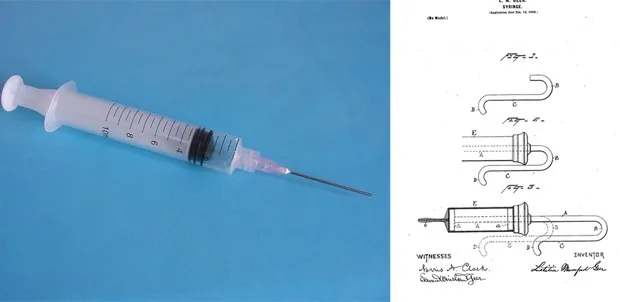 Photo: Letitia Mumford Geer, via s2.glbimg.com
Geer had no engineering background, no medical research credentials. She was just a nurse who'd seen too many preventable complications. But she had something more valuable than credentials: she understood the problem intimately.
Working at her kitchen table after her hospital shifts, Geer designed a syringe that could be manufactured cheaply and thrown away after a single use. The medical establishment initially dismissed her idea as wasteful and unnecessary. "We've always done it this way," became the refrain she heard in meeting after meeting.
It took her three years to find a manufacturer willing to produce her design. Today, disposable syringes prevent millions of infections worldwide. The woman who created them never made a fortune from her invention—she sold the patent for a few thousand dollars to pay her bills. But her kitchen-table innovation became the global standard.
The Teenager Who Solved What Adults Couldn't
Invention: Braille
Louis Braille was fifteen when he created the reading system that would bear his name. Born in a small French village, he'd lost his sight in a childhood accident and been sent to the Royal Institute for Young Blind in Paris—one of the few schools in the world that attempted to educate blind children.
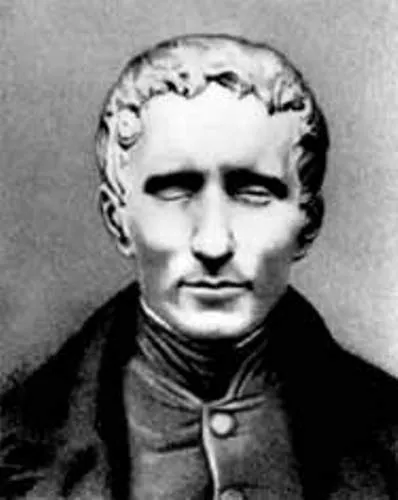 Photo: Louis Braille, via www.myinterestingfacts.com
The school's reading method was cumbersome: raised letters that students traced with their fingers, a process so slow that most students could barely finish a sentence before forgetting how it began. The adult educators accepted this limitation. The teenager didn't.
Braille had learned about a military communication system called "night writing"—raised dots that soldiers could read by touch in darkness. The system was too complex for battlefield use, but Braille saw its potential. Working alone in his dormitory, he simplified and refined the dot patterns until he'd created a complete alphabet.
His teachers weren't impressed. They banned his system, insisting that blind students should learn to read "normal" letters. Braille continued developing his method in secret, teaching it to other students who spread it among themselves like contraband.
It took twenty years after Braille's death for educators to finally adopt his system officially. The teenager they'd dismissed had created a tool that would liberate blind readers for generations.
The Mother Who Turned Grief into Protection
Invention: The Car Seat
Jean Ames was driving home from the grocery store in 1962 when another car ran a red light and slammed into her passenger side. Her two-year-old son, sitting beside her on the bench seat, was thrown against the dashboard. He survived, but barely.
In 1962, children rode in cars the same way adults did—unrestrained, vulnerable, often sitting on parents' laps or standing on seats. Auto manufacturers saw no market for child-specific safety equipment. "Kids are resilient," was the common wisdom.
Ames disagreed. Using her background in industrial design, she created a rear-facing seat that would cradle a child during impact, distributing crash forces across the strongest parts of a small body. She called it the "Tot-Guard."
Detroit's automakers rejected her design. Insurance companies showed no interest. Even parents questioned whether such protection was necessary—after all, they'd survived their own unrestrained childhoods.
Ames manufactured the first seats herself, selling them through newspaper ads and word-of-mouth. When crash test data finally proved her design's effectiveness, major manufacturers began licensing her innovations. The car seat she invented after nearly losing her son has since saved hundreds of thousands of young lives.
The Shipyard Worker Who Saw What Engineers Missed
Invention: The Life Raft
Maria Beasley worked in a Philadelphia shipyard during World War I, inspecting life preservers and safety equipment. She noticed something that troubled her: when ships went down, passengers often survived the initial disaster only to die of exposure in the water.
Existing life preservers kept people afloat but provided no shelter from waves, weather, or hypothermia. Naval engineers focused on ship design and weaponry; passenger comfort in emergency situations wasn't their priority.
Beasley began sketching designs for an inflatable raft that would lift survivors out of the water entirely. Working with scrap materials from the shipyard, she built prototypes in her garage, testing them in a nearby lake.
Her design featured a waterproof canopy, storage compartments for supplies, and a self-righting system that would flip the raft upright even in rough seas. When she approached the Navy with her invention, officers were skeptical. What could a factory worker know about marine safety that their trained engineers didn't?
The Titanic disaster had happened just five years earlier, making Beasley's timing perfect. Public pressure for better safety equipment finally forced maritime authorities to take her design seriously. Her life rafts became standard equipment on passenger ships worldwide.
The Janitor Who Cleaned Up Medicine
Invention: The Antiseptic Cleaning Protocol
Ignaz Semmelweis wasn't technically a janitor, but his colleagues treated him like one. As a young doctor in 1840s Vienna, he noticed something disturbing: women giving birth in the hospital ward staffed by doctors died at much higher rates than those in the ward staffed by midwives.
The medical establishment had explanations—"bad air," "divine punishment," "female constitution." Semmelweis had a different theory. He'd observed that doctors often came to deliveries straight from autopsies, their hands still carrying the smell of death.
He instituted a simple protocol: doctors must wash their hands with chlorinated lime solution before examining patients. Death rates in his ward plummeted immediately.
His colleagues were outraged. The suggestion that gentlemen's hands could be "dirty" was insulting. Senior physicians actively sabotaged his cleaning requirements, and hospital administrators eventually fired him.
Semmelweis spent years trying to convince the medical world that handwashing saved lives. He was ignored, ridiculed, and eventually committed to an asylum, where he died. It took decades for germ theory to vindicate his observations. The "janitor" who insisted on cleanliness had discovered one of medicine's most fundamental principles.
The Frustrated Parent Who Revolutionized Emergency Care
Invention: The EpiPen Auto-Injector
Sheldon Kaplan's daughter had severe allergies, and her doctor prescribed epinephrine injections for emergency treatment. But the available syringes were complicated—multiple steps, precise measurements, steady hands required at the moment of crisis.
Kaplan watched his wife struggle with practice injections and realized that in a real emergency, when their daughter was gasping for breath and panic filled the room, this system would fail. He needed something simpler, faster, foolproof.
Working as an engineer at a small medical device company, Kaplan adapted military auto-injector technology for civilian use. His design required just two steps: remove the safety cap and press against the thigh. The device would automatically deliver the correct dose.
Pharmaceutical companies initially showed little interest. The market for severe allergy treatment seemed too small to justify production costs. But Kaplan's persistence eventually led to partnerships that brought the EpiPen to market.
Today, millions of people with severe allergies carry auto-injectors based on his design. The father who refused to accept that emergency medicine had to be complicated created a device that turns ordinary people into lifesavers.
The Democracy of Innovation
These six inventors shared no common background, no advanced training, no institutional support. What they shared was proximity to problems that others accepted as unsolvable, and the stubborn refusal to believe that someone else would eventually fix things.
Their stories remind us that innovation doesn't require laboratories or research grants. It requires attention, empathy, and the willingness to act when everyone else is waiting for someone more qualified to step forward.
In a world that often treats invention as the exclusive domain of experts, these everyday heroes prove that the best solutions sometimes come from the people who understand problems most intimately—not because they studied them, but because they lived them.