When Paralysis Became Purpose: The Kitchen Revolution Started by a Teenage Stroke Survivor
The Day Everything Changed
Fannie Farmer was supposed to attend Medford High School in 1878. Instead, at sixteen, a stroke left half her body paralyzed and her future seemingly shattered. While her classmates prepared for graduation, Farmer spent months learning to walk again, her dreams of higher education dissolving like sugar in hot water.
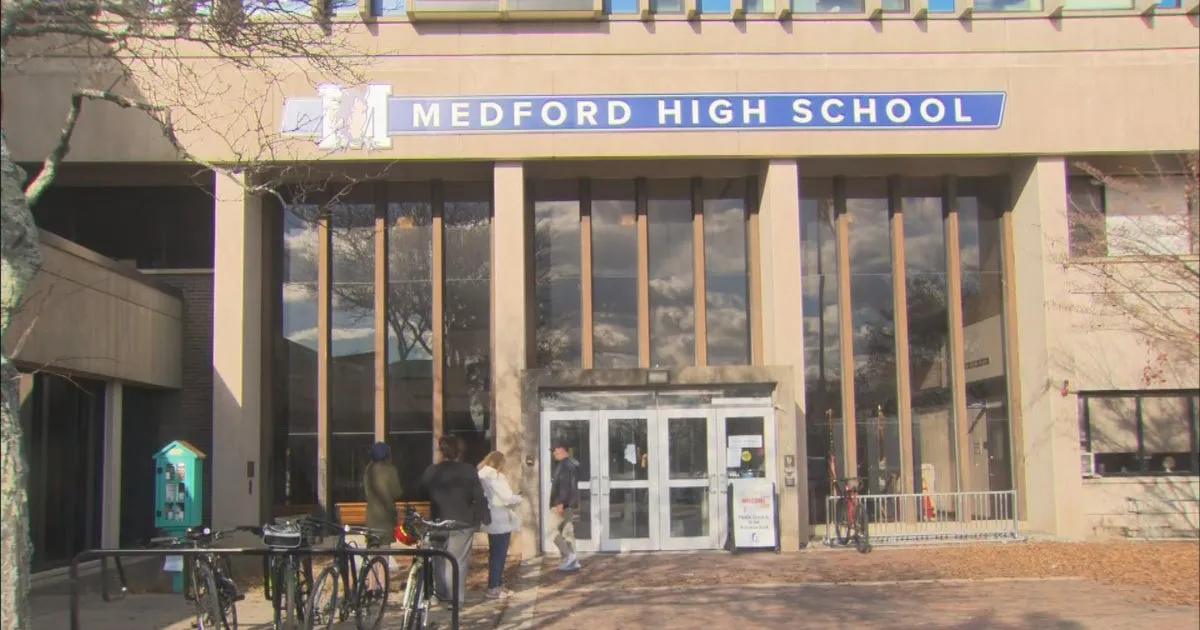 Photo: Medford High School, via assets2.cbsnewsstatic.com
 Photo: Fannie Farmer, via i.pinimg.com
What seemed like the end was actually the beginning of something extraordinary.
Finding Purpose in Other People's Kitchens
Unable to pursue traditional work, Farmer found herself doing what many young women with limited options did in 1880s New England: domestic service. But while others saw housework as drudgery, Farmer discovered fascination in the chaos of American kitchens.
Cooking in the late 1800s was more art than science. Recipes called for "a pinch of this" and "a dash of that." Instructions like "cook until done" or "add flour until it feels right" dominated cookbooks. Success depended entirely on intuition, experience, and luck.
Farmer watched dish after dish fail because measurements were guesswork. She saw talented cooks struggle to recreate their own successes. The inconsistency drove her crazy.
The Radical Idea That Changed Everything
While working as a mother's helper, Farmer began experimenting with something revolutionary: precise measurements. She convinced her employer to let her standardize every recipe in the household, measuring ingredients down to the level teaspoon and exact cup.
The results were immediate and dramatic. Dishes came out the same way every time. Baking became predictable. Other domestic workers began asking for her "system."
By her late twenties, Farmer had regained enough mobility to enroll at the Boston Cooking School. Her instructors quickly recognized something special. Here was a student who didn't just cook—she understood the science behind cooking.
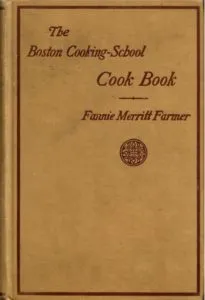 Photo: Boston Cooking School, via vintage.recipes
Building a Revolution One Recipe at a Time
After graduating, Farmer became head of the Boston Cooking School. She immediately began overhauling how cooking was taught, introducing laboratory-style precision to an art form that had relied on guesswork for centuries.
In 1896, she published "The Boston Cooking-School Cook Book." The publisher, Little, Brown and Company, was so skeptical about the market for a cookbook that they made Farmer pay for the first printing herself.
They were spectacularly wrong.
The Book That Standardized America
Farmer's cookbook didn't just contain recipes—it contained a philosophy. Every ingredient was measured precisely. Every instruction was clear and repeatable. She introduced the concept of level measurements, explaining exactly how to fill a measuring cup and level off the top.
The book's introduction laid out her revolutionary approach: "Correct measurements are absolutely necessary to insure the best results." It seems obvious now, but in 1896, it was radical.
The cookbook became an instant bestseller, eventually selling over four million copies. More importantly, it trained an entire generation of American cooks to think scientifically about food preparation.
Beyond the Kitchen
As Farmer's influence grew, she expanded beyond basic cooking. She became one of the first Americans to connect nutrition with health, developing special diets for invalids and teaching that food could be medicine.
She opened Miss Farmer's School of Cookery in 1902, training professional cooks and housewives alike. Her students carried her methods across the country, spreading the gospel of precise measurement from coast to coast.
Farmer also became an early advocate for what we now call food safety, teaching proper storage techniques and emphasizing cleanliness long before germ theory was widely accepted.
The Stroke That Saved American Cooking
That teenage stroke, which seemed to derail Farmer's life, actually redirected it toward something much more significant than she could have imagined. Her forced entry into domestic work gave her intimate knowledge of cooking's biggest problem: inconsistency.
Her physical limitations taught her patience and precision—exactly the qualities needed to revolutionize an entire industry. The same methodical approach she used in her own recovery became the foundation for transforming American kitchens.
Legacy in Every Kitchen
Today, every cookbook owes a debt to Fannie Farmer. The idea that recipes should include exact measurements seems so fundamental that it's hard to imagine cooking any other way. But before Farmer, American cooks were basically flying blind.
Her influence extends far beyond individual recipes. The entire concept of standardized food preparation—from restaurant chains to industrial food production—traces back to the principles she established in that first cookbook.
Even the modern cooking show, with its precise timing and measured ingredients, follows the template Farmer created more than a century ago.
From Setback to Revolution
Fannie Farmer's story reminds us that our biggest obstacles often become our greatest assets. Her stroke didn't just change her life's direction—it gave her the unique perspective needed to solve a problem that had stumped American cooks for generations.
She turned a personal catastrophe into a national transformation, proving that sometimes the most unlikely beginnings produce the most lasting changes. Every time someone follows a recipe with confidence, knowing it will work the same way twice, they're benefiting from a revolution started by a teenage stroke survivor who refused to let paralysis define her possibilities.