No Expiration Date: The Women Who Proved That Starting Over Has No Age Limit
Photo: Unknown, Public domain, via Wikimedia Commons
We have a story we like to tell about achievement in America. It goes like this: you figure out what you're meant to do early, you pursue it relentlessly in your twenties and thirties, and by the time you hit fifty, the arc of your life is more or less drawn. The big chapters are written. What's left is the epilogue.
The women in this piece never got that memo. Or they got it and threw it in the trash.
Each of them reached what most people would consider the final stretch of life and decided, for different reasons and in different circumstances, that they weren't finished yet. Not even close. Their stories are funny and hard and quietly radical — proof that the most powerful chapter of a life isn't always the one that comes first. Sometimes it's the one nobody saw coming.
The Great-Grandmother Who Finally Opened the Book
When Mamie Rearden of Edgefield, South Carolina, earned her GED in 2017, she was 101 years old. She had spent most of her life unable to read beyond a basic level, a fact she had hidden with extraordinary skill and quiet dignity for nearly eight decades. She raised children, ran a household, navigated a world built on the assumption of literacy — and she did it by memorizing, by listening, by developing the kind of compensatory intelligence that people forced to survive without something tend to build out of pure necessity.
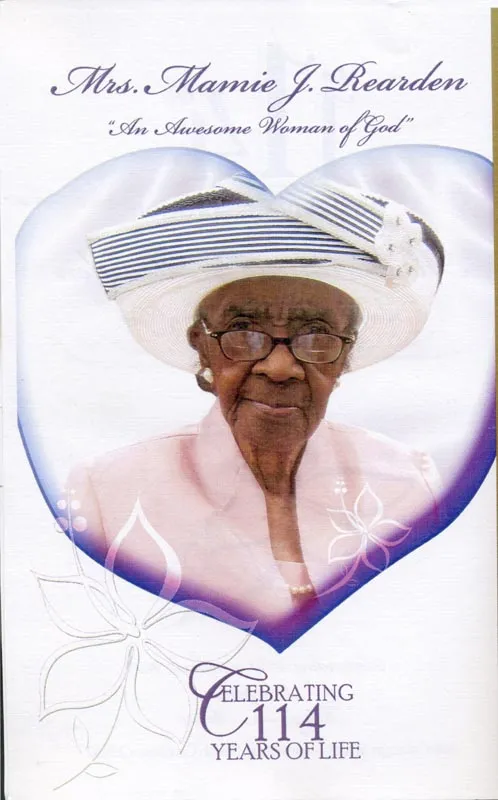 Photo: Mamie Rearden, via www.edgefieldadvertiser.com
She finally enrolled in an adult literacy program in her late nineties, initially at the encouragement of a great-grandchild who was also studying. "If she can go to school," the family logic went, "so can you." It was meant as motivation for the younger generation. Mamie took it as a personal invitation.
She earned her GED certificate at 101, one of the oldest people ever to do so in the United States. When the photo of her holding that certificate circulated online, the response was overwhelming — not because it was a feel-good story about an elderly woman doing something cute, but because it was a feel-true story about a woman who had wanted something her entire life and refused to stop wanting it.
Local literacy organizations reported a significant uptick in adult enrollment following the coverage of Rearden's story. Older adults who had spent decades carrying the same quiet shame she had finally decided that if a 101-year-old woman could walk into a classroom, maybe they could too.
She didn't just earn a diploma. She moved a wall.
The Nurse Who Had One More Story to Tell
Penelope Fitzgerald published her first novel at 60. That's already a late-bloomer story by conventional standards. But Lillian Holmes of Baton Rouge, Louisiana, had Fitzgerald beat.
Holmes spent 38 years as a registered nurse, mostly in pediatric oncology — a field that, as she described it in interviews, "teaches you everything about what matters and nothing about how to say it." She kept notebooks for decades. Fragments of conversations. Observations about the families she worked with. The way grief looks in a waiting room at two in the morning.
She retired at 72 with boxes full of those notebooks and no particular plan for them. Then her daughter, cleaning out a closet, found the boxes and started reading. "Mom," she reportedly said, "you have to do something with this."
Holmes spent six years turning those notebooks into a novel. She submitted it to literary agents at 81. Three rejections came back with notes that were encouraging but non-committal. The fourth agent signed her within a week. The novel — a quiet, devastating story about a pediatric ward in the American South — was published when Holmes was 83 and was reviewed warmly in several major publications. A small independent press picked it up for a second printing.
She is, at last report, working on a second book.
"People keep asking me if I wish I'd started sooner," she said in a local newspaper interview. "I tell them: I wasn't ready sooner. I needed all of it first."
The Teacher Who Ran Toward Something New
Julia Hawkins had spent 40 years teaching school in Baton Rouge before she took up competitive cycling in her late fifties. She was good at it. Really good. She raced until her eighties, collecting national titles in her age group with the quiet consistency of someone who simply shows up and does the work.
 Photo: Julia Hawkins, via b17news.com
Then, at 100 years old, she took up track and field.
Hawkins ran the 100-meter dash at the 2017 National Senior Games in Birmingham, Alabama, setting a world record in the 100-plus age category. She ran it again in 2019, at 103, breaking her own record. She became, for a brief and delightful news cycle, "the Hurricane" — a nickname that stuck because it suited her perfectly.
What made Hawkins remarkable wasn't just the athleticism, though that was genuinely extraordinary. It was the attitude. She didn't speak about her running in the language of defying age or beating the odds. She spoke about it the way an athlete in their prime speaks — in terms of improvement, strategy, what she wanted to work on next season. The narrative of limitation simply didn't interest her.
"I don't think about age," she told reporters after her 2019 race. "I think about running."
There's a lesson in that sentence that most people half her age haven't figured out yet.
The Painter Who Needed Time to Find Her Subject
Anna Mary Robertson Moses — better known as Grandma Moses — didn't begin painting until she was in her late seventies, after arthritis made embroidery too painful to continue. She needed something to do with her hands. She picked up a brush.
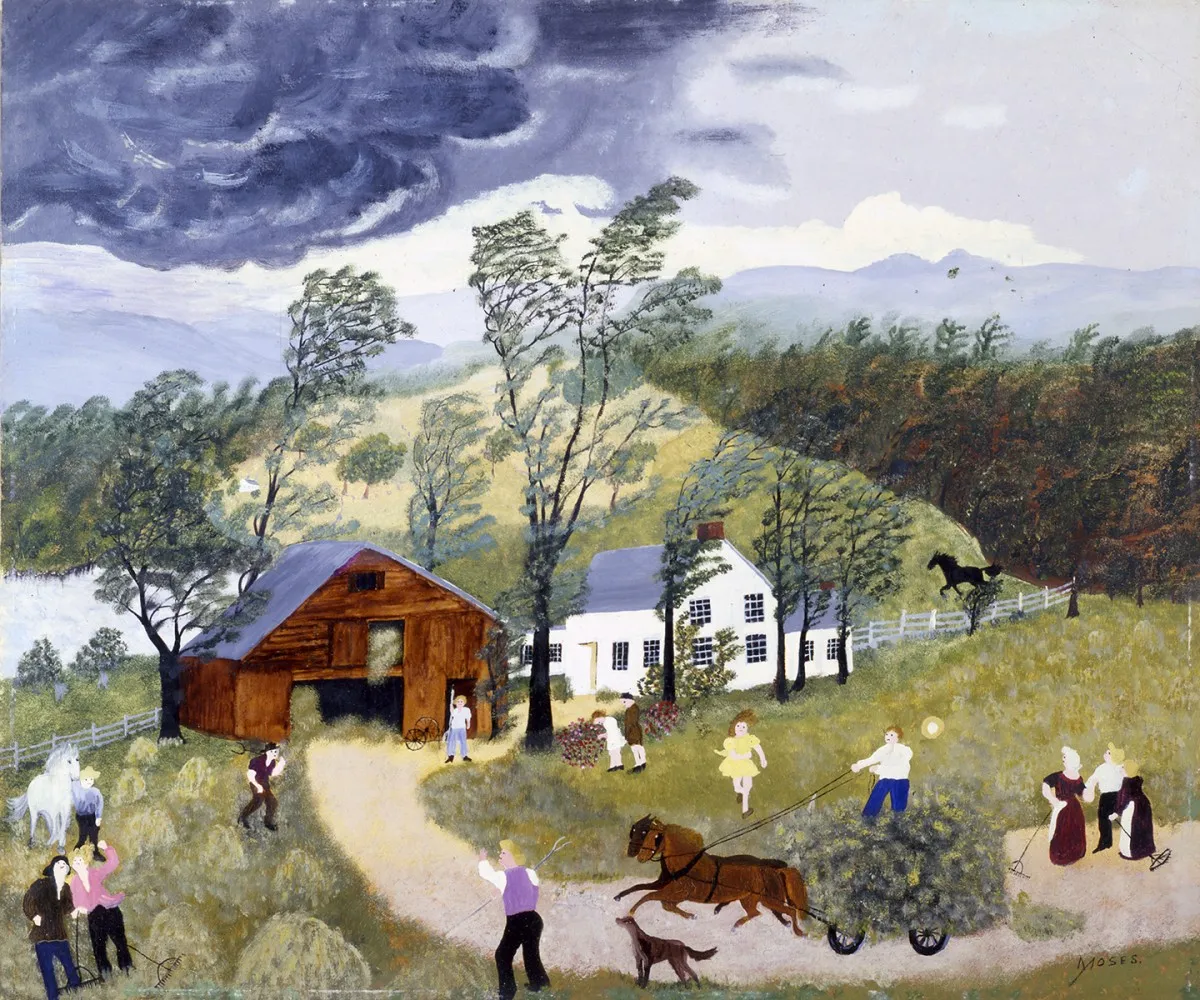 Photo: Anna Mary Robertson Moses, via www.illustrationhistory.org
She was discovered almost by accident in 1938, when an art collector named Louis Caldor spotted her paintings in a drugstore window in Hoosick Falls, New York, where they were being sold alongside her homemade jams. He bought several. He showed them in New York. The art world, which had not been waiting for a 78-year-old farmwoman from upstate New York to arrive on the scene, found itself completely charmed anyway.
Grandma Moses went on to become one of the most beloved American painters of the twentieth century. Her work sold for millions. She was featured on the cover of Time magazine. She appeared on television. She painted her last canvas at 101 and died the following year, in 1961, having produced more than 1,500 works of art — every single one of them made after most people would have considered her story over.
She'd spent her whole life on a farm, raising children and doing the work that needed doing. The art had been there the whole time. She just needed arthritis, and a drugstore window, and one person who stopped to look.
The Point That Doesn't Need to Be Made Loudly
The culture we live in is obsessed with early achievement. Forbes 30 Under 30. Teen prodigies. The twenty-two-year-old founder. There's nothing wrong with young success — it's real, it's worth celebrating, and it happens.
But it's not the only kind.
Mamie Rearden spent 80 years wanting to read and finally did it. Lillian Holmes spent 38 years collecting the raw material for a novel she hadn't written yet. Julia Hawkins spent a century figuring out what she was built for. Anna Moses spent her whole life getting ready to paint without knowing that's what she was doing.
None of them were late. They were exactly on time — their time, not the timeline the culture had written for them.
That's the thing about expiration dates. They're only real if you believe in them.