Burned to the Ground, Built Back Weirder: Five American Towns That Found Themselves in the Ashes

Photo by Raymond Kotewicz on Unsplash
There's a certain kind of American story that starts with catastrophe and ends with something nobody planned. Not the clean comeback narrative where hard work and optimism restore what was lost — but the stranger, truer version where the loss itself changes what gets built next. These five towns didn't recover. They transformed. And the thing they became was only possible because the thing they were had been completely destroyed.
1. Galveston, Texas — The City That Stopped Competing and Started Preserving
In September of 1900, Galveston was the fourth-largest city in Texas and one of the busiest ports on the Gulf Coast. It had ambitions. It had money. It had every reason to believe it was on its way to becoming something genuinely significant in the American South.
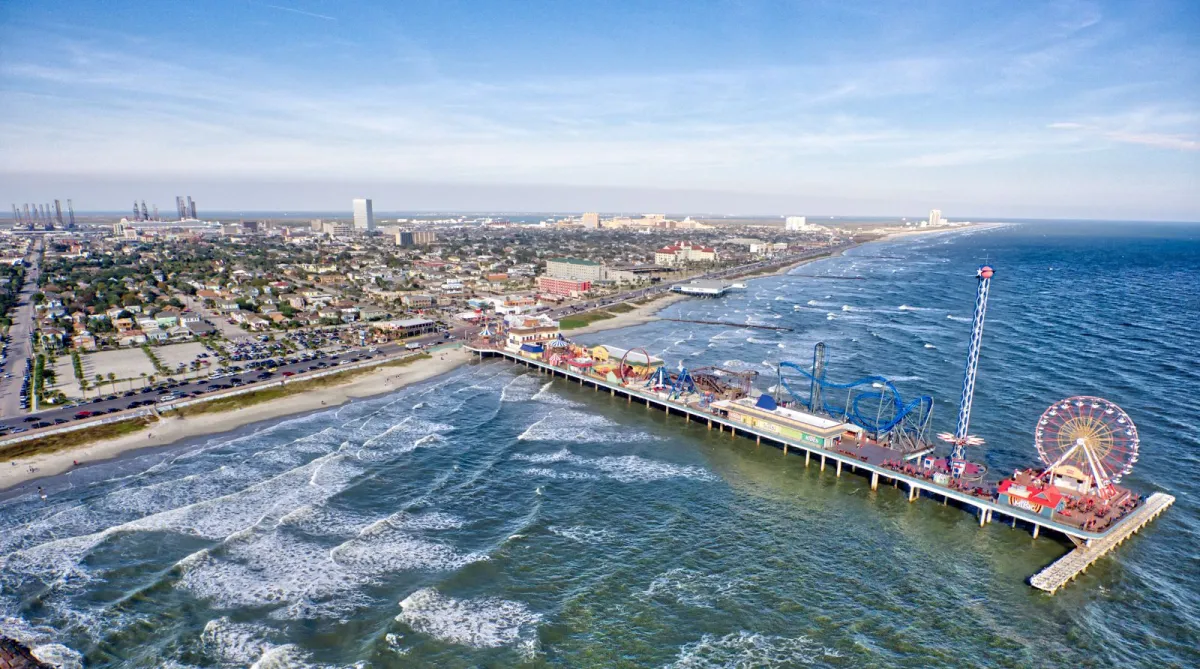 Photo: Galveston, Texas, via www.tripsavvy.com
Then the hurricane came.
What hit Galveston on September 8th, 1900 was the deadliest natural disaster in American history — a storm surge that swallowed the island whole and killed somewhere between six thousand and twelve thousand people in a single night. The city that woke up the next morning was barely a city at all. It was a debris field with a street grid.
Galveston rebuilt. It raised the grade of the entire island. It built a seawall. And in doing so, it made a quiet decision that would define it for the next century: it stopped trying to be Houston.
With its commercial ambitions permanently disrupted — Houston had quietly seized the port traffic during the recovery period and never gave it back — Galveston leaned into what it actually had: Victorian architecture, Gulf beaches, and the strange, layered identity of a city that had survived something unsurvivable. By the mid-twentieth century, it had become one of the most architecturally preserved cities in Texas, its historic district a direct consequence of the fact that post-storm construction had been careful and deliberate in ways that boom-town building never is.
The disaster that ended Galveston's commercial ambitions gave it something more durable: a character. The city that tried to be everything became the city that was irreplaceably itself.
2. Greensburg, Kansas — The Tornado That Built the Greenest Town in America
On May 4th, 2007, an EF5 tornado — the strongest classification on the scale — passed directly through Greensburg, Kansas, and destroyed ninety-five percent of the town. The population, already small, dropped by half almost immediately as residents scattered to neighboring communities.
What remained was a question: rebuild what existed, or build something else entirely?
The something else won. With almost no existing infrastructure left to work around, Greensburg made a decision that would have been politically impossible in any other context: every public building reconstructed would be built to LEED Platinum standard, the highest green building certification available. The reasoning was partly philosophical and partly practical — with everything gone, the cost difference between building green and building conventional was smaller than it would ever be again.
The result was a town that became, by some measures, the most sustainably built community in the United States. Wind turbines generate more electricity than the town uses. The rebuilt city hall, school, and hospital are among the most energy-efficient public buildings in the country. Architects and urban planners began making pilgrimages to Greensburg to study what had been accomplished.
None of it would have happened without the tornado. The existing infrastructure — older buildings, established utilities, the ordinary inertia of a working town — would have made the transition to sustainable building practically impossible. The destruction removed every obstacle at once.
Greensburg lost its past in two minutes. It spent the next decade accidentally inventing a model for the future.
3. Chicago, Illinois — The Fire That Gave America Its Skyline
The Great Chicago Fire of October 1871 burned for two days and destroyed roughly three and a half square miles of the city, leaving a hundred thousand people homeless and killing an estimated three hundred. By any measure, it was a catastrophe.
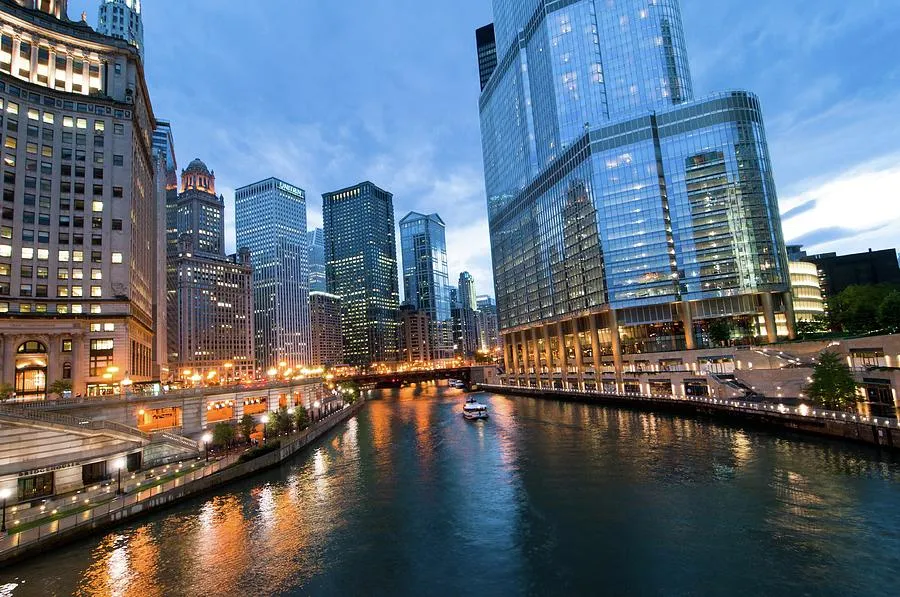 Photo: Chicago, Illinois, via images.fineartamerica.com
It was also, in the most uncomfortable possible sense, an opportunity.
Chicago before the fire was built largely of wood — fast, cheap, and deeply flammable. The city had grown so quickly in the decades after its founding that quality had been sacrificed for speed at almost every turn. What the fire cleared away wasn't just buildings. It cleared away the accumulated compromises of a city that had been built in a hurry.
What replaced those compromises was the Chicago School of Architecture — a movement that emerged directly from the reconstruction effort and changed the shape of every American city that followed. Architects like Louis Sullivan and William Le Baron Jenney, working on the blank canvas the fire had created, developed the steel-frame skyscraper, the modern curtain wall, and the design principles that would define urban architecture for the next century.
The phrase "form follows function" — Sullivan's famous formulation, the philosophical backbone of modern architecture — was worked out in the buildings that rose from Chicago's ashes. The skyline that defines American cities from New York to Houston to San Francisco traces its genetic lineage back to a fire that burned for two days in 1871 and left three hundred people dead.
Chicago didn't just rebuild. It invented the vocabulary that everyone else used to build.
4. Centralia, Pennsylvania — The Town the Fire Ate Slowly
Most disasters happen fast. Centralia's happened over decades, which made it stranger and, in its own way, more transformative.
In 1962, a fire started in a coal seam beneath the town — the exact cause is still disputed — and never went out. For the next thirty years, the underground fire spread through the abandoned mine tunnels beneath Centralia's streets, occasionally breaking through the surface, filling basements with carbon monoxide, and making the ground unpredictably unstable. The population of roughly a thousand people shrank to a handful of holdouts who refused to leave even as the government bought out their neighbors and demolished the houses around them.
Centralia today is not quite a ghost town and not quite a living one. It's something in between — a place where the street grid still exists but almost no buildings do, where steam vents rise from cracked asphalt, and where the remaining residents have a relationship to their home that defies easy categorization.
What Centralia became, almost despite itself, is one of the most visited and most photographed sites in Pennsylvania. Artists, writers, urban explorers, and documentary filmmakers have made it a destination precisely because it looks like nothing else in America. It is widely believed to have inspired the fictional town in the Silent Hill video game and film franchise — a piece of cultural legacy that no one in 1962 could have predicted.
The town that the fire slowly consumed became, in its ruin, a kind of accidental monument. Not to what was lost, but to the strange persistence of place even when everything that defined it is gone.
5. Napa, California — The Earthquake That Uncorked a Better Wine Country
On August 24th, 2014, a 6.0 magnitude earthquake struck the Napa Valley region, causing more than $300 million in damage and destroying an enormous quantity of wine — barrels collapsed, tanks ruptured, and the losses across the valley's wine industry were staggering.
But the earthquake also did something no zoning board or economic development committee had managed to accomplish in decades of trying: it forced a serious conversation about the valley's aging infrastructure.
Napa's downtown had been struggling for years with buildings that were seismically compromised, storefronts that sat empty, and a street-level experience that didn't match the region's reputation as one of America's premier culinary and wine destinations. The earthquake, by damaging so many of these buildings beyond practical repair, cleared the way for a reconstruction effort that redesigned the downtown core with pedestrian experience, local character, and long-term resilience in mind.
The rebuilt Napa downtown — with its riverfront development, its redesigned streetscapes, and its concentration of local restaurants and independent businesses — became, within a few years of the earthquake, one of the most economically vibrant small-city downtowns in California. Tourism increased. Property values rose. The identity that Napa had been trying to project for years finally matched the reality on the ground.
The earthquake cost the valley hundreds of millions of dollars. The rebuilt valley made it back, and then some, within a decade.
What All Five Have in Common
None of these places chose their disasters. None of them would have chosen them. The loss was real in every case — lives, livelihoods, history, irreplaceable things that could not be rebuilt because they simply no longer existed.
But in each case, the destruction also removed something else: the weight of what already existed. The inertia of the built environment, the political impossibility of change when there is something to lose, the way that existing things make it harder to imagine different things.
When everything burns — or floods, or shakes, or slowly smolders — the question stops being how do we protect what we have and becomes what do we actually want to build?
That's a harder question. It's also, sometimes, the only question worth asking.