From the South Bronx to the Supreme Court: How Sonia Sotomayor Refused the Story She Was Given
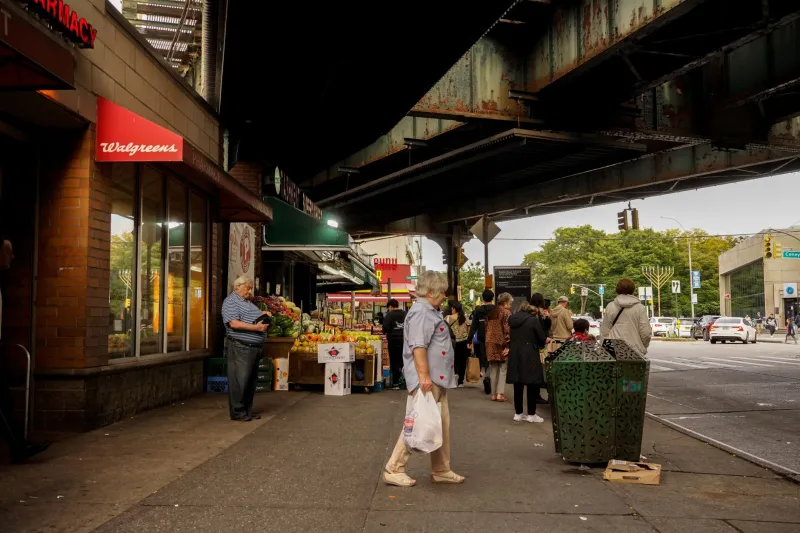
The Bronxdale Houses were not, in the 1960s, a place people associated with futures. The housing project in the South Bronx where Sonia Sotomayor grew up was the kind of place that got described in newspaper articles as a problem to be solved — overcrowded, underfunded, surrounded by a borough that was slowly being hollowed out by poverty, arson, and neglect. The South Bronx of Sotomayor's childhood would become famous, eventually, as a symbol of American urban decay. Politicians would come to photograph themselves against the rubble. The rubble would stay.
Sonia Sotomayor grew up inside that story. She also refused to be defined by it. And the path she took from Bronxdale to the United States Supreme Court is worth looking at closely — not as a simple triumph-over-adversity narrative, but as something more complicated and more instructive.
The Weight She Carried Young
Sotomayor was eight years old when she was diagnosed with Type 1 diabetes. In 1962, that diagnosis carried a different weight than it does today. Management was harder, the tools were cruder, and the long-term prognosis was genuinely uncertain. Her mother, Celina, taught her to give herself insulin injections because there was no other practical option. The family didn't have the resources for constant medical supervision.
She learned to manage her own body as a child the way other kids learned to tie their shoes — out of necessity, without ceremony.
Her father, Juan, was a factory worker with a third-grade education and a drinking problem that shadowed the household. He died when Sonia was nine. The grief was real and lasting — she's spoken about it throughout her life with a directness that doesn't try to smooth the edges off. He was her father. She loved him. He was also struggling with something he couldn't manage, and she watched what that cost the family.
After his death, Celina Sotomayor worked six days a week as a nurse, often doing double shifts. She was largely absent not because she didn't care but because survival required it. Sonia and her younger brother Juan were, in many practical ways, raising themselves.
The Turning Points That Don't Always Make the Official Story
Here's what often gets compressed in the shorthand version of Sotomayor's biography: the specific people and moments that interrupted the gravitational pull of her circumstances.
Her aunt, Titi Aurora, ran informal gatherings where Puerto Rican poetry and music were taken seriously as cultural inheritance rather than embarrassment. In a neighborhood where assimilation pressure was constant, these gatherings gave Sotomayor a framework for understanding herself as someone with a history worth knowing. That kind of identity grounding — the sense that where you came from had value — turns out to matter enormously when you're navigating institutions that weren't built for you.
At Cardinal Spellman High School in the Bronx, a nun named Sister Mary Donoghue pushed Sotomayor in ways that went beyond academic expectation. She didn't just grade her papers — she took her seriously as a thinker. That distinction sounds small. For a kid whose neighborhood was routinely treated as a lost cause, being taken seriously as an intellect was not a small thing.
And there was her cousin Nelson, who went to Princeton before her. That single data point — someone from her world making it through one of the most elite universities in the country — made the idea legible in a way it hadn't been before. Representation is a word that gets overused, but what it actually means in practice is: I can see that this is possible because someone who looks like me did it. Nelson made Princeton possible in Sotomayor's imagination. She applied. She got in.
Princeton, Yale, and the Education of an Outsider
She arrived at Princeton in 1972 as part of one of the first classes to include significant numbers of women and students of color. The campus was not exactly warm about it.
She's been candid about the culture shock — the sense of being academically underprepared in ways that the South Bronx school system, for all its individual dedicated teachers, couldn't fully address. She read The Elements of Style on her own to fix gaps in her writing. She sought out tutors. She worked harder than people who'd had better preparation, not because she was trying to prove anything, but because she understood that the gap was real and closable.
She graduated summa cum laude. Then she went to Yale Law School, edited the Yale Law Journal, and graduated in 1979.
At Yale, she handled a discrimination complaint against a recruiting firm that had made offensive remarks during an interview. She took it to a formal tribunal. She won. It was, in retrospect, a preview of what she'd spend her career doing — using institutional processes, with precision and patience, to hold institutions accountable.
The Long Road to the Bench
Sotomayor didn't go directly from Yale to a prestigious firm and a fast track to the judiciary. She spent five years as an Assistant District Attorney in Manhattan, trying cases — real cases, street-level cases, the kind that don't appear in law school hypotheticals. Homicides, robberies, assaults. She learned what the law looked like from the ground.
She moved into private practice and then onto the federal bench, appointed as a district court judge by George H.W. Bush in 1991. Her most famous moment at that level came in 1995, when she issued an injunction that ended the Major League Baseball strike — a ruling that required both legal precision and a willingness to make a consequential call under pressure. Baseball owners were furious. The players went back to work. The season resumed.
Bill Clinton elevated her to the Second Circuit Court of Appeals in 1997. Barack Obama nominated her to the Supreme Court in 2009. She was confirmed 68–31, becoming the first Latina and the third woman to serve on the Court.
What the Bronx Actually Built
The easy version of this story says that Sotomayor succeeded despite her childhood. But she's pushed back on that framing, and it's worth taking her seriously when she does.
The diabetes taught her self-discipline and body awareness at an age when most kids were still learning basic responsibility. Her father's death taught her about loss and about the specific kind of motivation that comes from knowing life doesn't guarantee second chances. Her mother's exhausting, relentless work ethic was the model in the house. The neighborhood — complicated, struggling, alive with culture and community even in its hardest years — gave her a ground-level understanding of how law and policy actually land on human lives.
None of that is a silver lining. It was genuinely hard. But it was also, as she has argued, an education that no elite institution could have provided.
She sits on the highest court in the land. She grew up in a housing project in a borough that America wrote off. The distance between those two facts is not a miracle. It's the result of specific people, specific decisions, and a refusal — quiet, persistent, decades-long — to accept the story she was given at birth.