After the Ash: How Chicago's Worst Night Became Someone Else's Blank Page
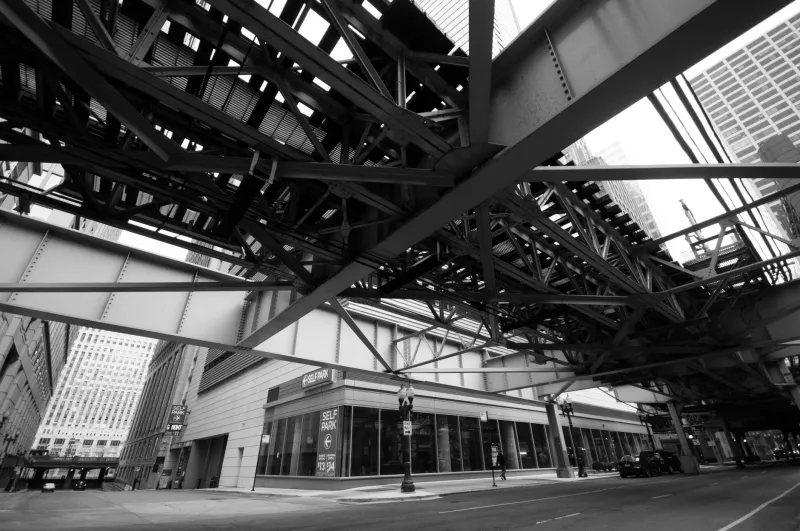
After the Ash: How Chicago's Worst Night Became Someone Else's Blank Page
By the time the fire burned itself out on October 10, 1871, Chicago looked like the surface of the moon. Three hundred people were dead. A hundred thousand were homeless. Seventeen thousand buildings had been reduced to cinders across nearly four square miles of the city. The Chicago Tribune, in a headline that would become famous, declared it "the greatest calamity that has ever befallen an American city."
 Photo: Chicago Tribune, via www.chicagotribune.com
And yet.
Within weeks, the rebuilding had begun — and not just the kind of rebuilding you'd expect, with wealthy developers and established merchants rushing back in to reclaim what they'd lost. Something stranger was happening in the rubble. People who had never had a foothold in Chicago's economy before the fire were suddenly standing on level ground. The destruction, it turned out, had been remarkably democratic. When everything burns, old hierarchies have a way of burning with it.
These are some of their stories.
Patrick O'Leary's Neighbor and the Grocery That Shouldn't Have Survived Anything
Brendan Callahan arrived in Chicago from County Clare, Ireland, in 1868 with eleven dollars and a letter of introduction to a cousin who had already moved on to Milwaukee. The cousin was gone. The eleven dollars lasted three weeks. By 1871, Callahan was working as a day laborer on the lakefront docks, sleeping in a boarding house on DeKoven Street — the same block, as history would record, where the fire started.
He lost everything he owned that night. Which, practically speaking, wasn't much. A change of clothes. A prayer book. A small amount of cash. But Callahan also lost what had been weighing him down: the debt he owed the boarding house, the grinding sense of obligation to a life that was going nowhere slowly.
In the aftermath, with relief supplies pouring into the city from across the country, Callahan spotted something nobody else seemed to notice. The distribution of food and goods was chaotic. Supplies were arriving faster than the relief organizations could sort and dispense them. People were hungry and disorganized and desperate for someone to simply handle things.
Callahan started handling things. He organized a small distribution operation out of a salvaged cart, then a tent, then a leased storefront on the newly cleared Randolph Street. By 1873, he had a small grocery operation supplying three neighborhoods. By 1880, he employed eleven people. He never became famous. His name doesn't appear in the history books. But his grandchildren ran a regional grocery chain in Illinois that lasted until 1961, and it all started because a fire took everything he owed and left him with only what he could build.
The Seamstress Who Sewed a School Together
Margaret Freeman was twenty-six years old in October 1871, a free Black woman working as a seamstress in Chicago's South Side community. She'd been born in Tennessee, had made her way north after the Civil War, and had built a quiet, careful life — a rented room, a small clientele, a reputation for reliable work.
The fire took her workroom, her equipment, and most of her client base, many of whom relocated after the disaster. What it didn't take was the network she'd built among the women in her community, most of whom were in exactly the same position she was: skilled, resourceful, and suddenly starting from scratch.
In the months after the fire, Freeman organized what she called a "sewing circle" — a cooperative arrangement where women pooled their skills and shared the cost of replacement equipment, taking on contracts that none of them could have handled alone. The circle grew. It formalized. By 1874, it had evolved into something closer to a trade school, teaching sewing, pattern-making, and basic business skills to Black women in Chicago who had few other avenues for economic training.
Freeman's operation never made her wealthy. But it trained hundreds of women over two decades, and several of her students went on to open their own businesses across the Midwest. The fire, she reportedly told a church congregation years later, "burned away everything I thought I needed and showed me what I actually had." What she had was a community. What she built was a ladder.
The Printer Who Lost His Press and Found His Voice
Joseph Medill didn't exactly rise from nothing — he was already co-owner of the Chicago Tribune before the fire. But what happened to him in the immediate aftermath is a story about the strange, clarifying power of total loss that belongs in any honest account of what 1871 made possible.
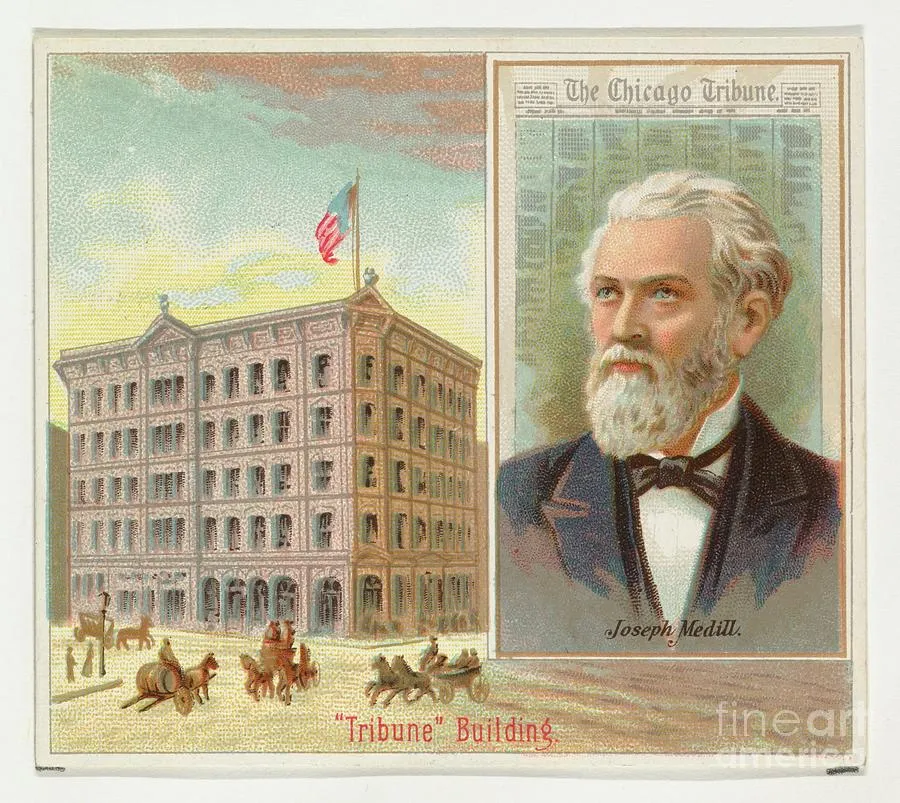 Photo: Joseph Medill, via images.fineartamerica.com
The Tribune building burned. The presses were destroyed. Medill, surveying the damage, reportedly stood in the ash and made a decision that his business partners thought was insane: the paper would publish the next morning regardless. The famous headline — "CHEER UP" — ran the day after the fire, printed on borrowed equipment from a Milwaukee printer who rushed supplies by train overnight.
But the more lasting consequence came in the months that followed. The fire, Medill later reflected, stripped away the comfortable assumptions he'd built up about what the Tribune was and who it served. Forced to rebuild from nothing, he reimagined the paper's mission — its coverage of the reconstruction, its advocacy for the city's working-class neighborhoods, its editorial voice. The Tribune that emerged from the ashes was a sharper, more purposeful publication than the one that had burned. Medill went on to become mayor of Chicago in 1871 and used the position to push through building codes and fire prevention regulations that reshaped urban planning across the country.
Sometimes losing your press teaches you what you actually want to print.
What the Fire Actually Built
There's a temptation, looking back at catastrophes, to romanticize them — to find the silver lining so eagerly that you gloss over the genuine devastation. The Great Chicago Fire killed people, traumatized thousands, and wiped out the savings and livelihoods of families who never recovered. That's the real story, and it deserves to be told straight.
But it's also true that catastrophe has a particular relationship with reinvention that comfort simply doesn't. When everything is gone, the question of what to rebuild becomes genuinely open in a way it never is when you're protecting what you already have. The hierarchies that kept certain people out — the capital requirements, the social networks, the established relationships — burned with everything else.
Brendan Callahan couldn't have opened a grocery in Chicago's pre-fire economy without connections he didn't have and capital he couldn't access. Margaret Freeman couldn't have founded a trade school without the crisis that made women in her community desperate enough to try something new. The fire didn't give them opportunity — it cleared away the obstacles that had been blocking it.
Chicago rebuilt itself in less than two years. It became, within a decade, one of the fastest-growing cities in the world. The architecture that rose from those ashes — literally and metaphorically — defined American urban design for a generation.
But the most remarkable rebuilding happened quietly, in storefronts and sewing circles and borrowed printing presses. It happened in the lives of people who had nothing left to protect and everything left to build.
That's what the fire actually made. Not just a new city. A new set of possibilities for people who'd never had them before.