The Book That Couldn't Get a Meeting: How a Rejected Manuscript Ended Up in Every American Classroom

The Book That Couldn't Get a Meeting: How a Rejected Manuscript Ended Up in Every American Classroom
There is a particular kind of institutional blindness that only becomes visible in hindsight. It's the blindness that rejected The Great Gatsby as "too short and cryptic." The blindness that told Orwell that Animal Farm was "impossible to sell." And it's the same blindness that looked at one of the most practically useful, genuinely transformative educational manuscripts of the twentieth century and said, essentially, who would want this?
The answer, it turned out, was millions of American students. But the publishing world needed a while to catch up.
The Man Behind the Manuscript
William Strunk Jr. was not a revolutionary. He was a Cornell English professor — precise, private, a little demanding — who had spent years watching his students drown in their own sentences. They wrote long when they should have written short. They chose the passive voice when the active voice was sitting right there. They buried their meaning under qualifications and throat-clearing and what Strunk privately called "the fog of academic habit."
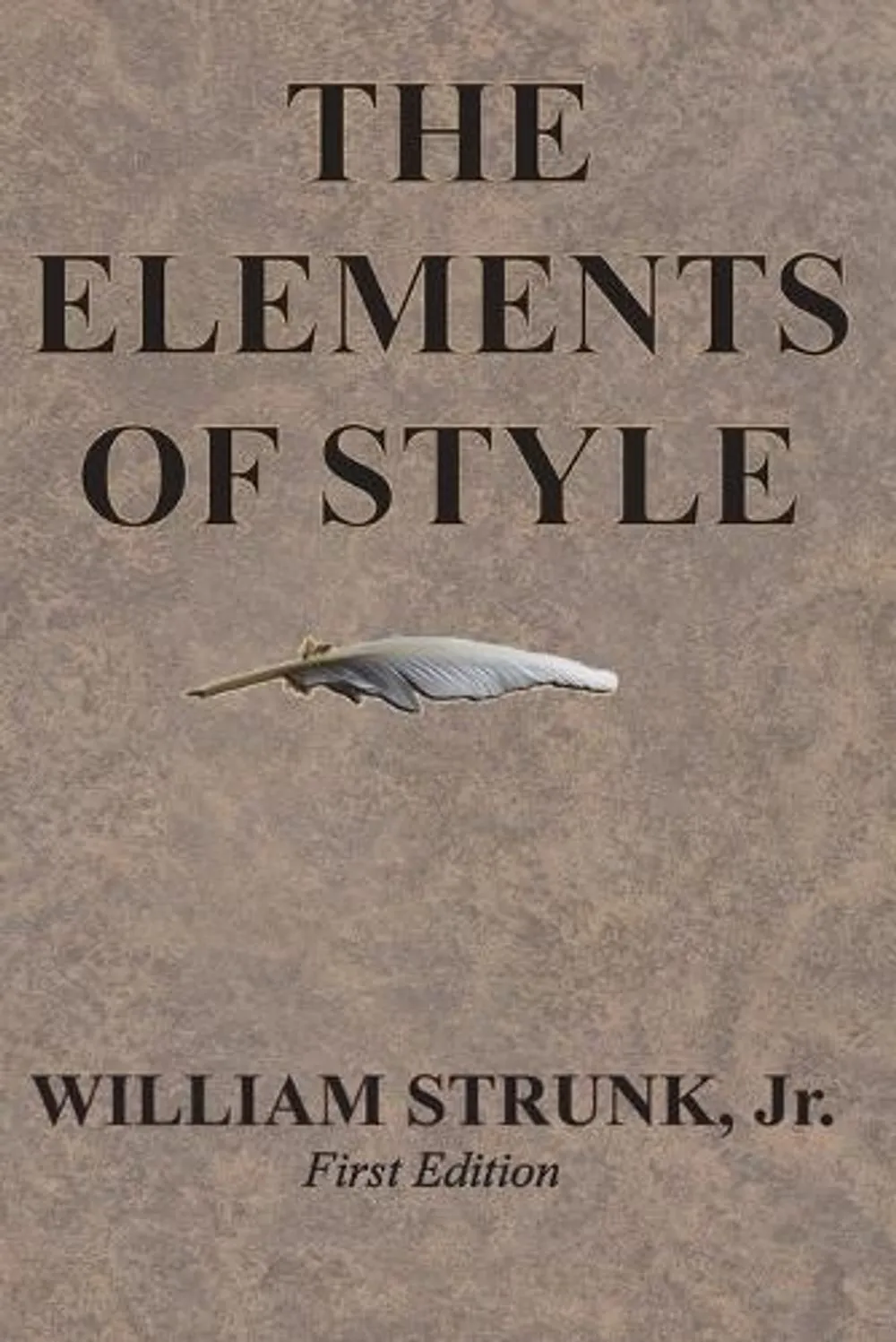 Photo: William Strunk Jr., via images.thenile.io
So in 1918, he did what frustrated teachers sometimes do: he wrote it all down. The result was a slim, privately printed pamphlet that he distributed to his own students and more or less forgot about. It wasn't written for publishers. It wasn't written for posterity. It was written for twenty-year-olds who needed someone to tell them, plainly and without apology, how to make their words work.
For decades, that's essentially all it was.
The Gatekeepers Weigh In
Strunk's pamphlet circulated quietly through Cornell for years, photocopied and passed along, the kind of document that gets worn soft at the edges from being read and re-read. One of the students who encountered it was a young writer named E.B. White, who would go on to write Charlotte's Web and Stuart Little and become one of the most respected prose stylists in American letters.
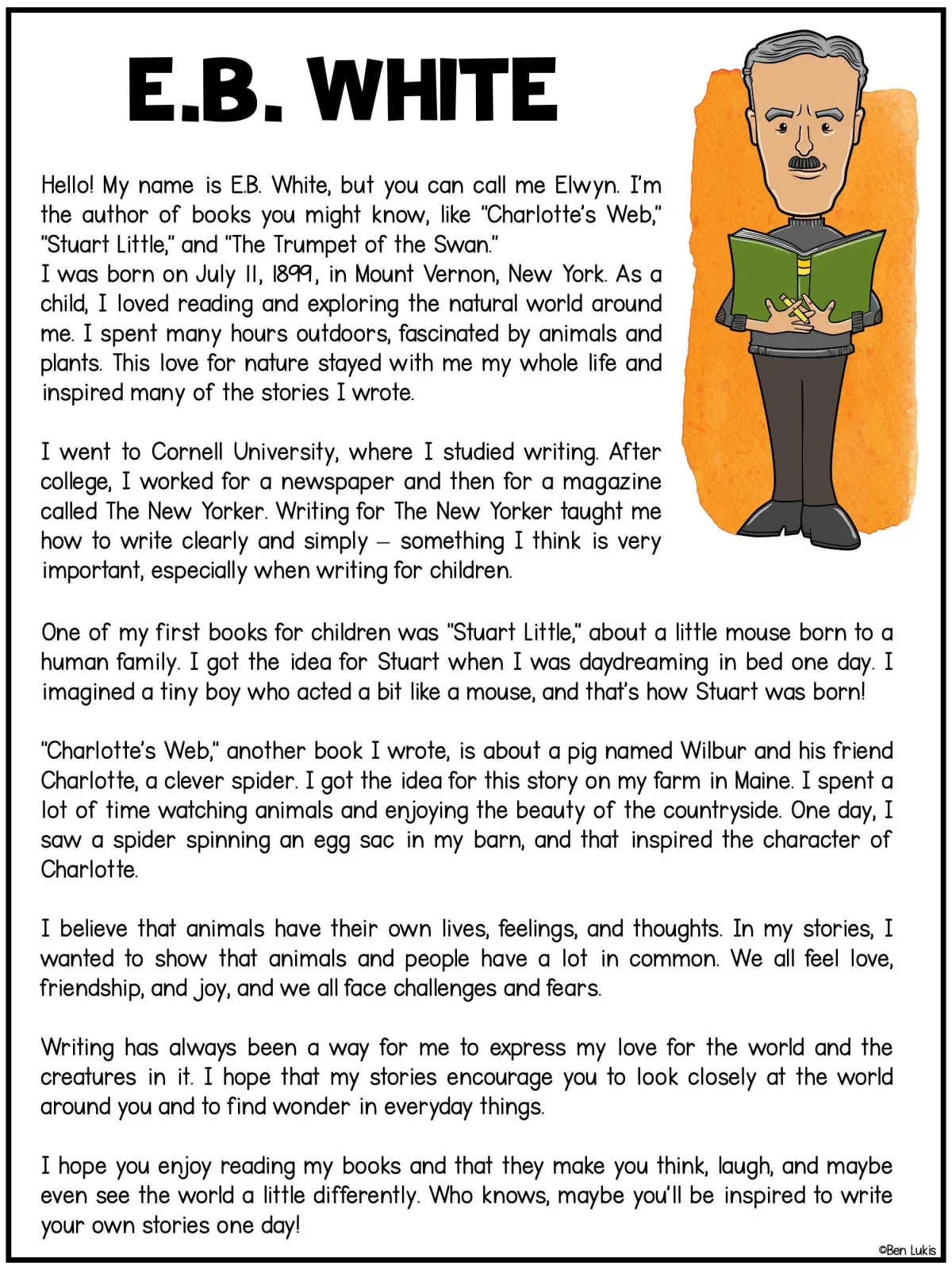 Photo: E.B. White, via i.etsystatic.com
White never forgot the pamphlet. When Strunk died in 1946, White wrote a remembrance of him in The New Yorker that described the little book with genuine affection. Macmillan, the publisher, noticed the piece and reached out. Would White be willing to revise and expand Strunk's pamphlet for a general audience?
White said yes. And then the trouble started.
The revised manuscript that White and the Macmillan editors produced went through a process that was, by multiple accounts, contentious and demoralizing. Several editors within the house questioned whether there was any real market for a style guide aimed at everyday writers. One internal memo, later recounted by White in correspondence with friends, dismissed the project as "a niche product for English teachers who already know this material." Another suggested the book was "too prescriptive for the academic market and too academic for the general one" — the publishing equivalent of being told you're too tall for the short line and too short for the tall one.
The book nearly died in committee. It nearly died in revision. It nearly died in the production process when a dispute over the cover design stalled release for months.
What Happened When It Finally Got Out
The Elements of Style was published in 1959. It sold modestly at first. Then it sold more. Then it sold in a way that publishing executives describe, when they are being honest, as something they did not predict and cannot fully explain.
By the 1970s, it was a standard text in high school and college writing courses across the country. By the 1980s, it was showing up on lists of essential books that had nothing to do with education — Time magazine would eventually name it one of the hundred most influential books written in English since 1923. As of the last reliable count, it has sold more than ten million copies. It has been continuously in print for over sixty years.
The book that an editor once called a niche product for English teachers became, quietly and without fanfare, one of the most widely read nonfiction books in American history.
The Gap Between Gatekeeping and Impact
It's worth sitting with that for a moment. Not because the publishing industry is uniquely bad at recognizing value — every industry has its version of this story — but because the specific blindness here is instructive.
The editors who hesitated weren't fools. They were applying the logic of their market, which had historically rewarded complexity over clarity, length over brevity, and academic apparatus over plain usefulness. A book that told writers to omit needless words was, in a certain ironic light, itself a needless word in the eyes of an industry built on long manuscripts and elaborate arguments.
What they missed was the audience that existed just outside their frame of reference: the student who had never been taught to write clearly and desperately needed someone to show them how. The journalist. The business writer. The person who simply wanted to communicate without embarrassing themselves. That audience was enormous and almost entirely invisible to the gatekeepers who controlled what got published.
Strunk had seen that audience because he taught it every day. White had seen it because he'd been part of it as a young man. The editors saw only the categories their industry had already mapped.
What Gets Decided and Who Decides It
The story of The Elements of Style is sometimes told as a triumph of quality over skepticism — the good book that found its way despite the obstacles. That's a satisfying version. But there's a harder version underneath it.
For every manuscript that eventually found its audience, how many didn't? How many genuinely useful, genuinely transformative works died in the slush pile because they didn't fit the shape of what institutions already understood as valuable? How many classrooms are still waiting for the book that someone, somewhere, decided wasn't worth the meeting?
Strunk wrote his pamphlet because he saw a need his students had and no existing resource was meeting it. He didn't ask permission. He printed it himself and handed it out. The institutional world caught up to him eventually, forty years later, after he was dead.
That's not a footnote to the story. That's the whole story.
The Simplest Lesson
There's a sentence in The Elements of Style that appears early and gets quoted often: Vigorous writing is concise.
It's a sentence about prose. It's also, if you squint at it, a sentence about everything else. The idea that found its way into millions of American classrooms wasn't elaborate or credentialed or backed by institutional authority. It was just true, and useful, and written by someone who cared more about the student in front of him than the editor down the hall.
Sometimes that's enough. It just takes a while for the room to catch up.