She Solved What Experts Couldn't — Then Watched Someone Else Take the Credit

Photo by National Cancer Institute on Unsplash
She Solved What Experts Couldn't — Then Watched Someone Else Take the Credit
In 1915, a 23-year-old Black woman working in a University of Hawaii laboratory solved a medical problem that had stumped researchers for generations. She developed an injectable treatment for leprosy — the first one that actually worked — using a process so technically demanding that established chemists had repeatedly failed to crack it.
 Photo: University of Hawaii, via manoa.hawaii.edu
She died the following year.
And then, for nearly a century, her name disappeared entirely.
A Family Built on Capturing Light
Alice Augusta Ball was born in Seattle in 1892 into a family that understood, in a very particular way, that how you look at the world determines what you can see in it. Her grandfather, James Presley Ball, was one of the most celebrated Black photographers of the 19th century — a man who used his camera to document African American life with a dignity that mainstream media routinely denied it. Photography ran through the family like a current.
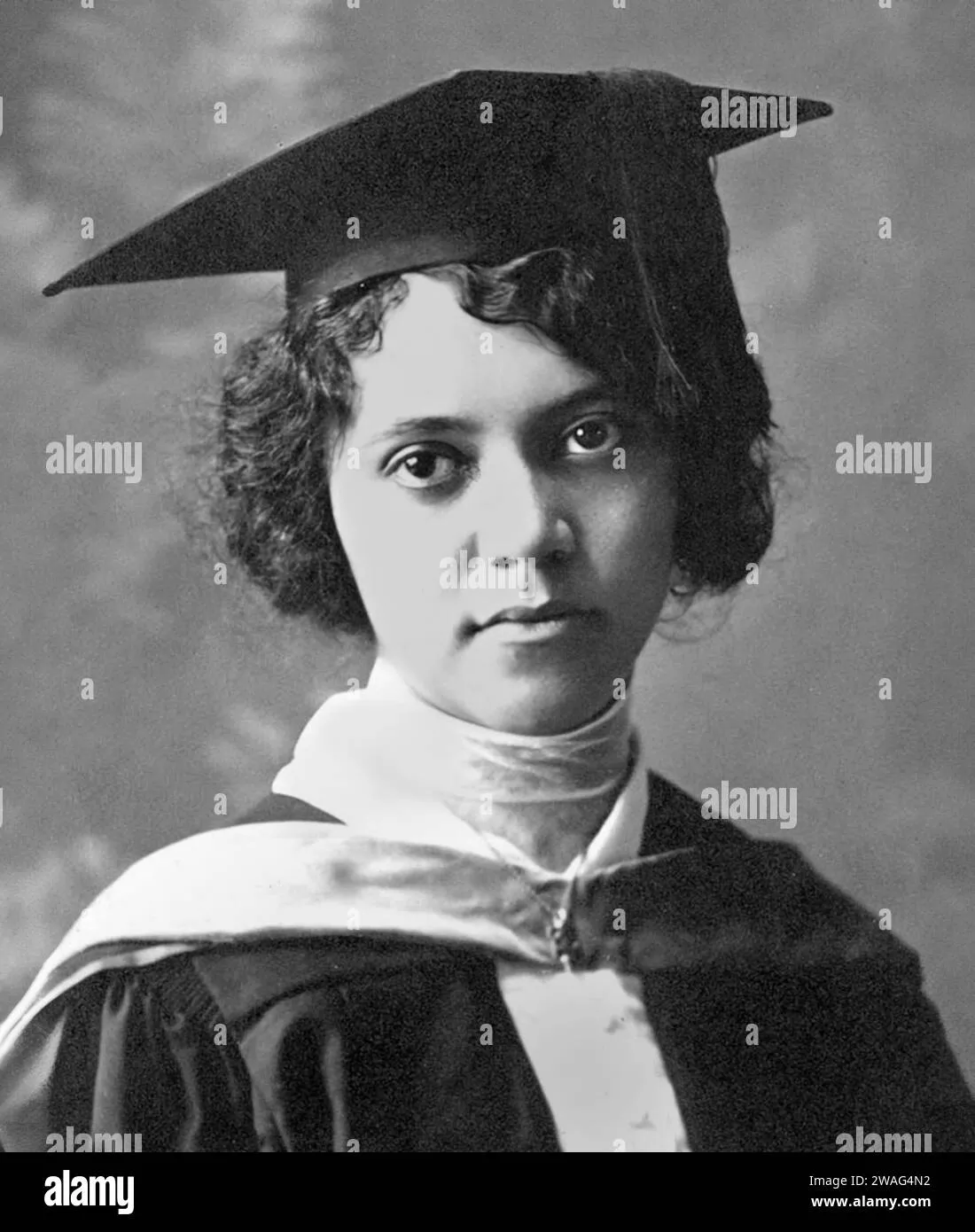 Photo: Alice Augusta Ball, via c8.alamy.com
Alice inherited that precision, that instinct for looking closely and getting things right. But her medium wasn't light and silver nitrate. It was chemistry.
She was exceptional at it from early on. She earned two degrees — one in pharmacy from the University of Washington and one in pharmaceutical chemistry — and in 1915 became the first woman and the first Black person to graduate with a master's degree from the College of Hawaii, which would later become the University of Hawaii. She was 23. She was already teaching chemistry there when most people her age were still figuring out what they wanted to do with their lives.
The Problem Nobody Could Solve
Leprosy — now known as Hansen's disease — had been devastating communities for centuries. By the early 20th century, the standard treatment involved rubbing or injecting chaulmoogra oil, derived from the seeds of a Southeast Asian tree, directly into patients. The oil contained compounds that could suppress the disease. The problem was that in its natural form, it was nearly impossible for the body to absorb. Injections were excruciating. The oil would clump. Patients often refused treatment because the side effects were so severe.
Researchers had spent years trying to modify chaulmoogra oil into something the body could actually use. They kept failing.
Ball didn't fail.
Working in the University of Hawaii's lab, she developed a method of extracting the active fatty acid esters from the oil and preparing them in a water-soluble, injectable form that the body could absorb without the brutal side effects. It was painstaking work — the kind that required not just theoretical knowledge but an almost tactile feel for what was happening at the molecular level. She got it right.
The treatment began to show real results in leprosy patients at the Kalaupapa settlement on Molokai, a place where people had been exiled from society simply for being sick. For the first time, some of them began to improve.
The Theft That Almost Lasted Forever
Alice Ball died in December 1916, at 24 years old. The cause was never conclusively determined — some accounts suggest she may have been accidentally exposed to chlorine gas during a teaching demonstration. She left behind no published record of her method.
Two years later, Arthur Dean, the president of the College of Hawaii, published a paper describing a refined version of the chaulmoogra oil treatment. He called it the Dean Method. He did not mention Alice Ball.
For the next several decades, the treatment was used on thousands of leprosy patients around the world. Arthur Dean received the credit. Alice Ball received nothing.
It wasn't until 1922 that a fellow researcher named Harry Hollmann — who had worked with Ball and knew exactly what she had accomplished — published a paper explicitly naming her as the originator of the method. He called it the Ball Method. The correction was noted in a footnote of history and then, for the most part, forgotten again.
The full restoration of her legacy didn't come until the late 1990s, when a chemist named Paul Wermager and a historian named Stanley Ali began digging through the University of Hawaii's archives and piecing together what had happened. In 2000, the university finally acknowledged Ball's contribution officially. The governor of Hawaii declared February 29 — a leap day, fittingly rare — Alice Ball Day. A plaque was placed near the chaulmoogra tree that still grows on campus.
She had been dead for 84 years.
What Was Actually Lost
It's worth sitting with that number for a moment. Eighty-four years. Two full generations during which Alice Ball's name was absent from the story of her own discovery. During which students learned about the Ball Method without knowing who Ball was. During which a young Black woman's intellectual achievement was quietly absorbed into the career of a white male administrator who had done none of the work.
What's remarkable — and painful — is how unremarkable this was. Ball's erasure wasn't an anomaly. It was a pattern. Women, Black scientists, and researchers from the margins of institutional power were routinely stripped of credit for their contributions throughout the 19th and 20th centuries. The mechanisms were often mundane: a failure to publish before death, a supervisor who claimed the work, an institution that found it easier to acknowledge one name than two.
The wonder isn't that Alice Ball was forgotten. The wonder is that she accomplished what she did in the first place — that a 23-year-old Black woman in 1915, operating in a world that offered her almost no structural support and a great deal of active resistance, somehow walked into a laboratory and solved a problem that had defeated everyone who came before her.
The Sharpest Tool in the Room
Alice Ball's story doesn't fit neatly into the kind of triumph narrative that makes for easy inspiration. There's no late-career vindication, no Nobel Prize, no moment where justice arrives in time to mean something to the person who deserved it. She died young, her work was stolen, and the correction came a century too late to matter to her.
What her story offers instead is something harder and more honest: proof that brilliance exists everywhere, in every community, in every body, regardless of whether the institutions around it choose to recognize it. Ball didn't solve the chaulmoogra problem because she was given resources and recognition. She solved it despite having neither.
The chaulmoogra tree on the University of Hawaii campus still produces fruit. The plaque beside it has her name on it now. It's not enough. It's also not nothing. And the story of how she got there — a Seattle girl from a family of photographers, who looked closely at the world and saw what everyone else had missed — is one that deserves to be told as often as possible, in as many places as possible, until the forgetting is finally, permanently undone.