The Patient Who Became the Expert: Seven People Whose Illnesses Unlocked Medical History

There's a particular kind of knowledge that no textbook can teach and no clinical rotation can manufacture. It's the knowledge that comes from living inside a problem — from feeling it in your body, navigating it in real time, and spending years thinking about it because you have no choice. For most of history, medicine dismissed that knowledge. These seven people refused to let it be dismissed.
1. Nicholas Hobbs — Polio Survivor Who Rebuilt Childhood Psychology
Nicholas Hobbs contracted polio as a young man at a time when the disease was reshaping American childhood in terrifying ways. Rather than retreating from the experience, he carried it into his academic work, becoming one of the architects of ecological psychology — a field that understood children not as isolated cases to be treated, but as whole human beings embedded in families, schools, and communities. His own experience of being reduced to a diagnosis had taught him exactly what that kind of reduction cost a person. His Project Re-ED, developed in the 1960s, transformed how America approached children with emotional and behavioral challenges. He knew what it felt like to be labeled. He designed systems that refused to do it.
2. Lauder Brunton — Angina Patient Who Discovered Nitrates
In the 1860s, Brunton was a young British physician who also happened to suffer from the chest pain of angina himself. That combination — clinical training plus lived experience — pushed him toward experiments that most researchers had no urgent reason to pursue. He discovered that amyl nitrite could relieve angina attacks almost immediately, laying the groundwork for the nitrate drugs that cardiologists still use today. He wasn't working from a detached scientific curiosity. He was working from a very personal one.
3. Alexis Carrel — Survived a Near-Fatal Wound, Invented Vascular Surgery
Carrel witnessed the assassination of French President Sadi Carnot in 1894 and watched the man bleed to death from a stab wound to a major blood vessel — a death that was, at the time, considered medically inevitable. The experience haunted him. He spent years afterward learning to sew together blood vessels with a precision that surgical practice had never demanded before, eventually developing suturing techniques that made organ transplantation conceivable. His obsession wasn't academic. It was personal. He had watched someone die from a problem he believed could be solved, and he couldn't let it go. He won the Nobel Prize in Physiology or Medicine in 1912.
4. Harriet Martineau — Bedridden for Five Years, Transformed Medical Sociology
Martinaeu spent most of the 1840s confined to her bed in Tynemouth, England, with an illness that doctors couldn't agree on and couldn't fix. She used the time to write Life in the Sickroom, a book that did something radical for its era: it centered the patient's experience as a legitimate source of medical knowledge. She argued that doctors who had never been seriously ill were missing an entire dimension of the conditions they were treating. Her work planted seeds that took more than a century to fully flower — but the modern movement toward patient-centered care owes something real to a woman who spent five years unable to get out of bed and decided that experience was worth documenting.
5. August Bier — Tested Spinal Anesthesia on Himself
In 1898, German surgeon August Bier was convinced that injecting cocaine directly into the spinal canal could produce regional anesthesia — numbing the lower body without rendering the patient unconscious. He was so convinced, in fact, that he let a colleague perform the procedure on him. The experiment worked. The resulting paper introduced spinal anesthesia to the medical world, opening the door to surgical procedures that had previously been too dangerous or too painful to attempt. Bier's willingness to use his own body as the test case wasn't recklessness. It was the act of a man who trusted his reasoning enough to stake his spine on it.
6. Ellen Swallow Richards — Chronic Illness Survivor Who Founded Environmental Health Science
Richards battled persistent health problems throughout her life at a time when the connection between environment and illness was poorly understood and widely ignored. She became the first woman admitted to MIT, where she channeled her experience of physical vulnerability into a career studying the relationship between environmental conditions and human health. She essentially founded the field of home economics as a science — not as a domestic nicety, but as a rigorous discipline concerned with air quality, water safety, and the chemistry of everyday life. She understood, from personal experience, that the body doesn't exist in isolation from its surroundings. Her work helped establish the EPA's intellectual foundations a century before the agency existed.
7. Frederick Banting — Watched His Friend Die of Diabetes, Discovered Insulin
Banting's connection to diabetes was personal long before it was professional. He had watched friends and patients deteriorate from a disease that medicine couldn't touch — a slow, wasting death that was, at the time, simply accepted as inevitable. He was a general practitioner with no research background and no institutional prestige when he walked into a University of Toronto lab in 1920 and asked for the resources to pursue a hunch. Most established researchers had already tried and failed. Banting hadn't, partly because he came at the problem with a different kind of urgency. By 1921, he and his team had isolated insulin. By 1922, a dying 14-year-old boy named Leonard Thompson became the first human to be treated with it. Banting won the Nobel Prize two years later.
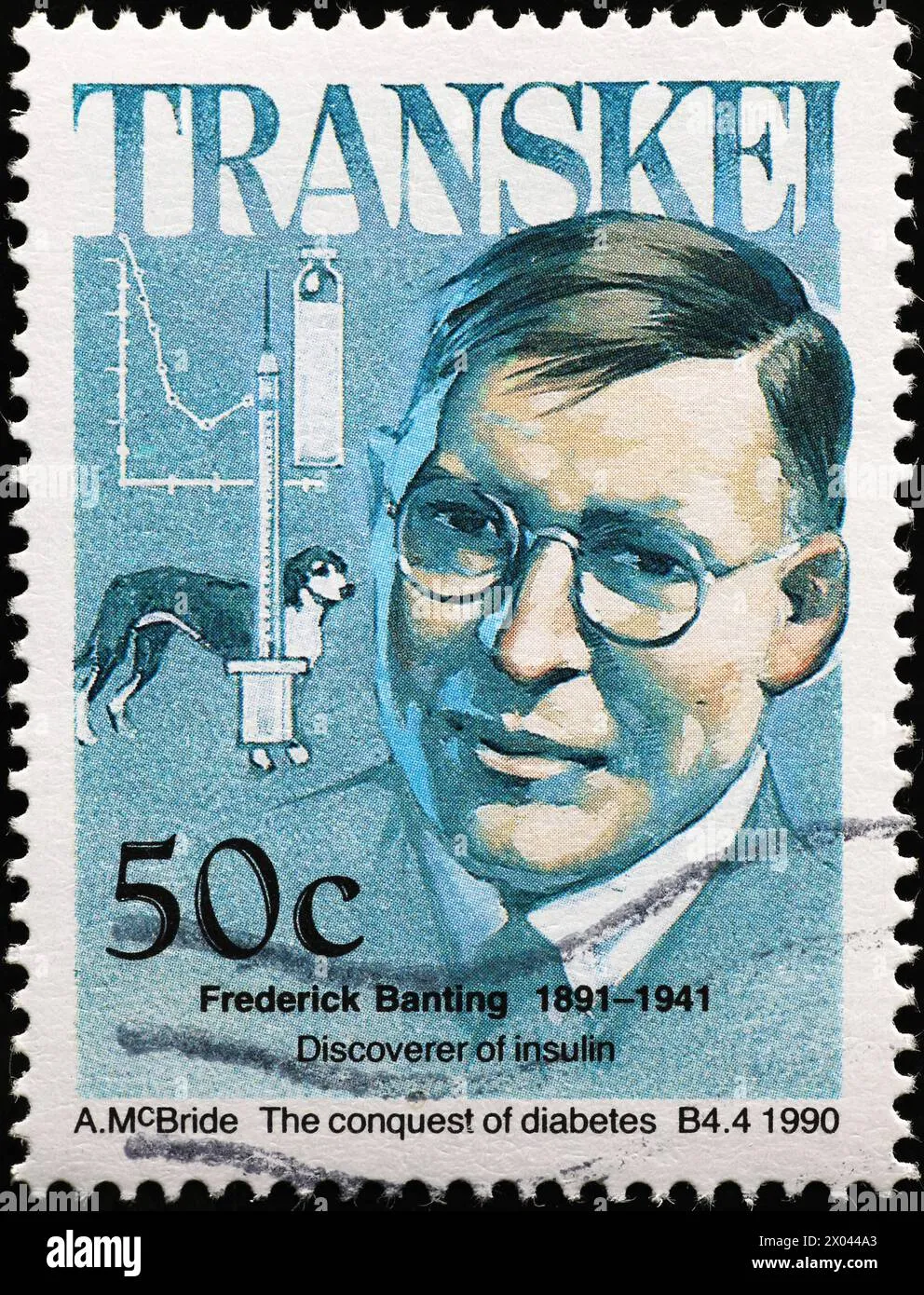 Photo: Frederick Banting, via c8.alamy.com
The Pattern That Keeps Appearing
Look at these seven lives and a pattern emerges that's hard to explain away. In each case, proximity to suffering didn't disqualify these people — it sharpened them. It gave them a focus that purely academic curiosity rarely generates. It made the problem feel urgent in a way that grant cycles and publication pressures can't manufacture.
Medicine has spent a long time treating patients as the passive recipients of expert knowledge. These seven people remind us that sometimes the patient is the expert — and that the most important qualification for solving a problem might just be having lived inside it long enough to understand it from the inside out.