Nobody's Kid: How Walter Cronkite Went From Dead-End Gigs to America's Most Trusted Voice

Nobody's Kid: How Walter Cronkite Went From Dead-End Gigs to America's Most Trusted Voice
There's a version of Walter Cronkite that most Americans remember: the steady baritone, the thick-framed glasses, the moment he pulled off his glasses on live television and told the country that John F. Kennedy was dead. That version feels inevitable in hindsight — like the universe had always intended him for that chair.
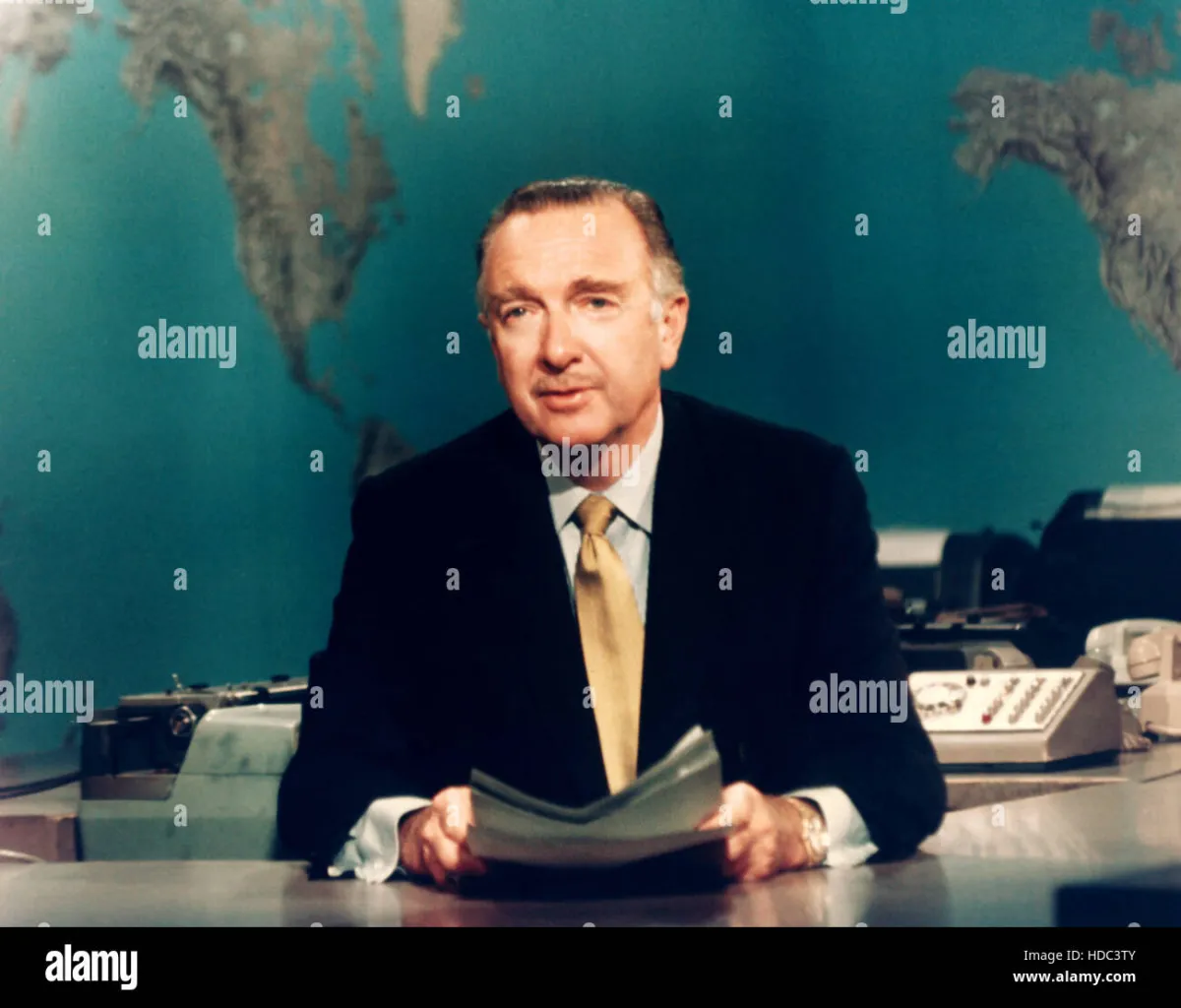 Photo: Walter Cronkite, via c8.alamy.com
It hadn't.
The real story starts in St. Joseph, Missouri, where Walter Leland Cronkite Jr. was born in 1916 into a family that moved constantly and never had much to spare. By the time he landed in Houston as a teenager, he was already doing what he'd do for the rest of his life: watching, listening, asking questions nobody else thought to ask.
 Photo: St. Joseph, Missouri, via www.worldatlas.com
The Kid Who Couldn't Stay in School
Cronkite enrolled at the University of Texas in 1933. He was sharp, curious, and completely uninterested in sitting still long enough to earn a degree. He lasted three years before walking away without graduating — not because he was failing, but because the real world kept pulling at him harder than any lecture hall could.
While still a student, he'd already started stringing for the Houston Post, calling in scores and small crime items for almost nothing. He liked it. He liked it more than school. So he left.
What followed was a stretch of years that looked, from the outside, like a young man stumbling. He bagged groceries. He worked odd jobs. He bounced between small radio stations taking whatever work he could find, learning the rhythms of broadcasting by doing it badly first and then doing it better.
His first radio job — at KCLO in Kansas City — ended when he got fired. Not dramatically. Just quietly let go, the way a lot of early careers end, with a manager who didn't see what the kid was worth and a kid who wasn't sure either.
He didn't quit.
Learning the Trade in the Margins
What Cronkite did instead was keep moving. He found work at KNOW in Austin, then at a United Press office, learning the wire service business from the ground up. He covered state legislature sessions, minor courts, the grinding daily machinery of local news that nobody outside the city limits cared about. He was good at it — not because he had any natural advantage, but because he genuinely wanted to understand what he was covering.
That curiosity wasn't performance. It was constitutional. Cronkite was the kind of person who couldn't hear a half-told story without needing to know the rest of it. In the news business, that quality is worth more than almost any credential.
When World War II broke out, he pushed hard to get overseas. He flew on bombing missions over Germany as a correspondent — not because his editors required it, but because he thought it was the only honest way to report what was happening. He covered the Nuremberg trials. He was in the room for history, not because history had sought him out, but because he had relentlessly positioned himself to be there.
The Long Road to the Anchor Chair
Even after the war, the path wasn't clean. CBS News didn't immediately recognize what it had. Cronkite spent years building credibility in Washington, covering the emerging Cold War, learning television as a medium when most journalists still thought it was a novelty.
He anchored CBS's coverage of the 1952 presidential conventions and was so effective that Edward R. Murrow — the god of broadcast journalism at the time — reportedly grew wary of the competition. That tension is worth sitting with: even after Cronkite had proven himself, the establishment wasn't entirely sure where to put him.
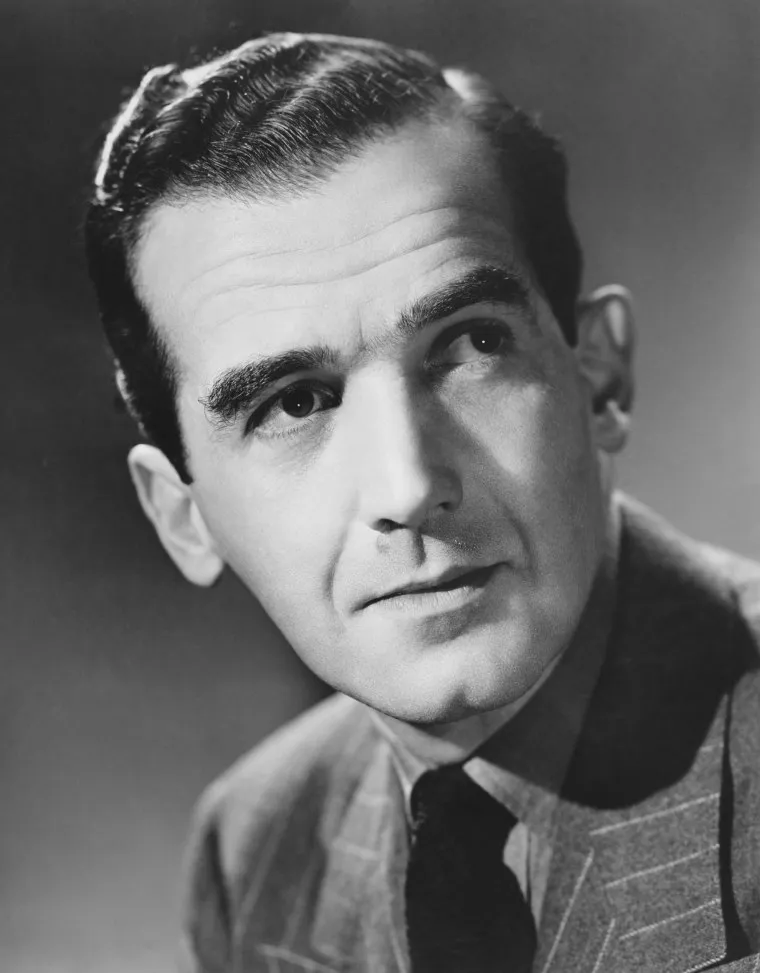 Photo: Edward R. Murrow, via media-cldnry.s-nbcnews.com
He got the CBS Evening News anchor chair in 1962. He was 45 years old.
From that desk, he narrated the assassination of a president, the moon landing, and the slow unraveling of the Vietnam War. His 1968 editorial — in which he declared Vietnam a stalemate — is said to have moved Lyndon Johnson to privately remark that if he'd lost Cronkite, he'd lost Middle America. Johnson announced he wouldn't seek re-election weeks later.
That's what the grocery boy from Missouri had become: a man whose opinion could shift the course of a presidency.
What His Life Actually Teaches
The temptation with a story like Cronkite's is to sand it down into something inspirational and simple — he worked hard and made it. But the real lesson is more specific than that.
Cronkite succeeded because he never stopped treating every assignment as if it mattered. The courthouse beat in Texas mattered. The wire service dispatch mattered. The local radio segment that maybe three people heard mattered. He wasn't waiting for a big moment to start taking his work seriously. He was already serious.
He also failed. Got fired. Got overlooked. Got edged out by more established names who had the institutional backing he lacked. And every single time, he found another door and walked through it.
There's no Ivy League shortcut in his biography. No wealthy family connection. No lucky break that explains everything. Just a kid from the middle of the country who decided that understanding the world was the most important thing he could do with his time, and who spent fifty years proving himself right.
When Cronkite signed off for the last time in 1981, a poll named him the most trusted man in America. He'd earned every syllable of it — one unglamorous job at a time.