Invisible Until She Wasn't: One Woman's Journey From Hiding Illiteracy to Earning a Degree
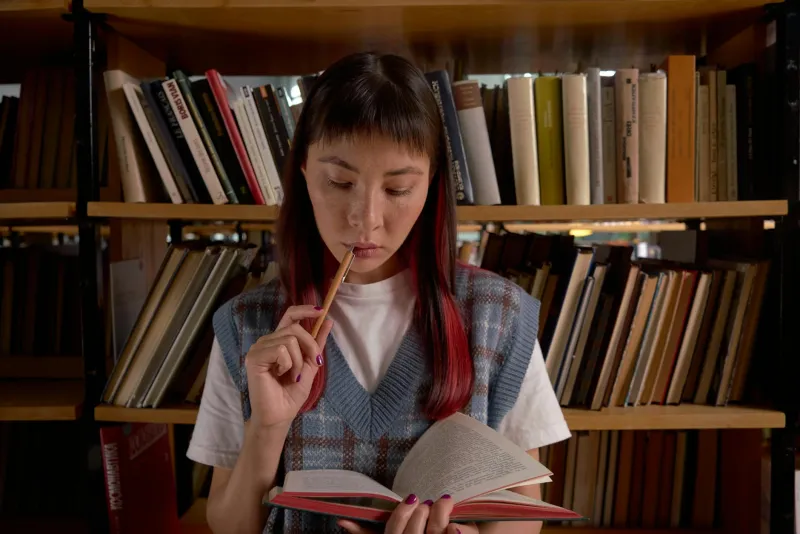
Invisible Until She Wasn't: One Woman's Journey From Hiding Illiteracy to Earning a Degree
Mary Walker knew how to survive without reading. She'd been doing it for forty-five years.
She'd memorized the layout of her grocery store so well that she could find items without reading labels. She'd gotten jobs through friends who didn't ask for applications. She'd navigated doctor's offices by listening carefully and memorizing what the receptionists said. She'd raised children and held down work and built a life that looked, from the outside, like everyone else's.
But inside, there was a constant hum of anxiety. A fear that any moment, someone would ask her to read something. A shame so deep that she'd never told anyone—not her husband, not her closest friends—what she actually couldn't do.
Then, at an age when most people think their possibilities are closing, Mary decided to start over.
The Roots of Silence
Mary grew up in rural Kentucky in the 1960s, in a family where school was something that happened but didn't matter much. Her parents had limited education themselves. Resources were scarce. The school system, overwhelmed and under-resourced, didn't catch that she was struggling. Or maybe they caught it and had no bandwidth to help. By the time she was twelve, she'd fallen so far behind that she was reading at a second-grade level, and everyone—including her—had accepted that she'd never catch up.
By high school, she'd stopped trying. She dropped out at sixteen, which felt less like failure and more like acceptance of an inevitable fact.
She got a job. She got married. She had children. And she got very, very good at pretending.
That pretending required constant vigilance. It required strategies that exhausted her. She'd ask her husband to read mail to her, framing it as casual. She'd use her phone to look up information by voice instead of text. She'd volunteer for jobs that didn't require reading and avoid ones that did. Every decision, even small ones, was filtered through the question: "Will this expose me?"
The shame was worse than the limitation. She wasn't illiterate because she was stupid—she knew she was intelligent. She was illiterate because of a specific combination of circumstance, timing, and a school system that had failed her when she was too young to advocate for herself. But that distinction didn't matter much when you were the one living it.
The Breaking Point
Mary was forty-four when something shifted. Her youngest child was applying to college, and Mary realized she couldn't help with essays or applications. She couldn't sit with her kids and read to them. She couldn't fill out forms without asking someone else to do it. She was watching her children's lives expand into a world of words while she remained locked out of it.
She'd spent decades telling herself it didn't matter. That she'd built a full life anyway. That some people just weren't readers, and that was okay.
But it did matter. It mattered every single day.
She found a flyer for an adult literacy program at a community center an hour away. She called, hung up. Called again, hung up again. On the third try, she forced herself to stay on the line.
The woman who answered her voice was kind. She didn't sound surprised. She didn't sound judgmental. She said, "A lot of people are in your situation. You're not alone. We can help."
Mary signed up for classes starting the following Monday.
Starting From Zero
The first day, she sat in a classroom with five other adults, ranging in age from thirty-two to sixty-eight. They were a nurse who'd hidden her struggles for two decades. A construction worker who'd gotten by on verbal instructions. A woman who'd raised three kids and never told anyone. A man who'd run a small business without ever being able to read his own contracts.
They were all invisible, until they weren't.
Their instructor, a retired teacher named Patricia, started with phonics. Not the remedial, condescending version that assumes adults who can't read are somehow less intelligent. The real version—the actual structure of the English language, explained in a way that suddenly made sense.
Mary had never understood why English was so chaotic. Why "read" was pronounced two different ways. Why there were so many rules and so many exceptions. Patricia explained it like she was teaching calculus to someone who'd never seen math before: with respect, with patience, with the assumption that the student was perfectly capable of understanding.
It was slow at first. Frustrating. Mary was learning alongside a thirty-five-year-old named James, and watching him sound out words she still struggled with was humbling. But it was also liberating. For the first time in her life, she was allowed to struggle without shame. Everyone in that room was learning. Everyone was starting from the same place.
The Long Climb
She went to class three times a week for two years. She practiced at home, slowly working through books that were designed for beginning readers—not because she was a child, but because that's where the skill building had to start.
At forty-six, she read her first full novel. It was a paperback mystery, nothing fancy, but she wept when she finished it. She'd done something she'd been told her entire life was beyond her reach.
At forty-seven, she got her GED. Her family threw a party. Her husband cried. Her kids, now grown, told her she was the strongest person they knew.
At forty-eight, she enrolled in community college. It was terrifying. She was older than most of her classmates. She was starting from a place of foundational weakness in reading and writing that her peers had been building on since childhood. She worked full-time and went to school at night. She read every assignment multiple times. She got tutoring. She failed her first composition class and retook it.
But she kept going.
Becoming Visible
At fifty-eight, Mary Walker graduated from community college with an associate's degree in human services. She was one of a dozen graduating seniors being honored that day, but she was the one who walked across the stage with the most improbable backstory—the one that nobody looking at her would have guessed.
She's now sixty-two and working as a literacy counselor at the same community center where she learned to read. She works with adults who are in the same situation she was: invisible, ashamed, convinced their story is already written.
She tells them what Patricia told her: "You're not alone. We can help."
The Invisible Epidemic
Mary's story is extraordinary, but her situation is not. An estimated 21 million American adults—roughly 4.3% of the population—live with illiteracy. That's not people who struggle with reading. That's people who can't read at a basic functional level. Most of them, like Mary, are hiding it.
They're working jobs that don't require reading. They're navigating healthcare systems without understanding their own medical records. They're raising children and helping with homework in ways that never require them to actually read. They're exhausted from the constant mental load of hiding.
The shame is often worse than the limitation. There's a deep cultural narrative that illiteracy is a personal failure, a mark of stupidity or laziness. It's neither. It's usually a combination of childhood circumstances, school systems that didn't catch the problem early enough, and economic pressure that forced people to work instead of staying in school.
But the shame keeps people silent. And silence keeps them stuck.
Never Too Late
Mary's degree isn't fancy. She's not going to become a CEO or a doctor. But that was never the point. The point was that she reclaimed agency over her own story. She went from a woman hiding a fundamental limitation to a woman actively helping others overcome the same limitation.
She proves something that our culture is often reluctant to admit: your starting point doesn't determine your ending point. You can spend forty-five years in one place and choose to move. You can rebuild yourself at an age when most people think rebuilding is behind them.
Every time Mary meets with an adult learner who's terrified of being exposed, who's convinced they're too old or too far behind, she tells them her story. She doesn't tell it as inspiration porn—"look at what I accomplished!" She tells it as proof of a simple fact: if you're willing to be vulnerable enough to ask for help, if you're willing to do the slow work of building from the foundation, if you're willing to be a beginner at something you've been ashamed about for decades, you can change.
You're never too old. You're never too far behind. You're never beyond the point where your story can be rewritten.
You just have to be willing to stop hiding and start building.