The Wandering Student Who Accidentally Designed Tomorrow
The Art of Being Lost
In 1972, a scraggly-haired college dropout was wandering the halls of Reed College in Portland, Oregon. Steve Jobs had officially left the expensive liberal arts school after just one semester, but he stuck around campus anyway — crashing on dorm room floors, returning Coke bottles for the five-cent deposits, and walking seven miles across town every Sunday for a free meal at the local Hare Krishna temple.
Most people would call this rock bottom. Jobs called it freedom.
With no grades to worry about and no degree requirements to fulfill, he could finally take the classes that actually interested him. And one morning, something caught his eye on a bulletin board: "Calligraphy with Robert Palladino."
The Monk Who Taught Beauty
Father Robert Palladino wasn't your typical college professor. This Trappist monk had spent years perfecting the ancient art of beautiful writing, studying manuscripts that dated back centuries. His calligraphy class at Reed wasn't about career preparation or practical skills — it was pure art for art's sake.
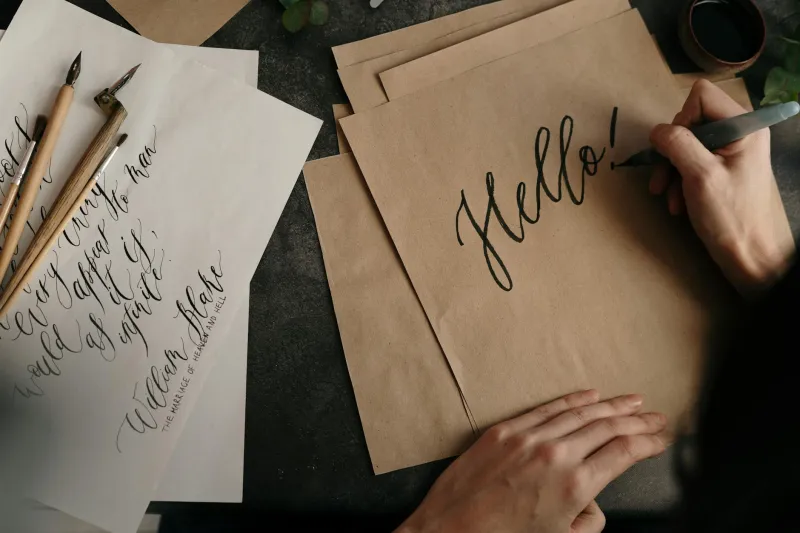
Jobs slipped into the back of Palladino's classroom and discovered something he'd never encountered in his brief engineering studies: the idea that letters could be beautiful. Not just functional, but genuinely gorgeous.
"I learned about serif and sans-serif typefaces, about varying the amount of space between different letter combinations, about what makes great typography great," Jobs would later recall. "It was beautiful, historical, artistically subtle in a way that science can't capture."
For a kid who'd grown up tinkering with electronics in his garage, this was revolutionary. Technology didn't have to be ugly. Function didn't have to sacrifice form.
The Long Game Nobody Saw Coming
At the time, learning calligraphy seemed like the most impractical thing a future tech entrepreneur could do. This was 1972 — personal computers didn't exist yet, and the few computers that did exist displayed text in crude, blocky letters that looked like they'd been carved with a hatchet.
Jobs had no way of knowing that within a decade, he'd be designing machines that would put typography in the hands of millions of people. He couldn't have predicted that his calligraphy education would become one of Apple's most important competitive advantages.
But that's exactly what happened.
When Art Met Silicon
Fast-forward to 1984. Apple was preparing to launch the Macintosh, a computer that would make advanced technology accessible to regular people. While other companies focused purely on processing power and technical specifications, Jobs insisted on something nobody else cared about: making the computer's text look beautiful.
"If I had never dropped in on that single course in college, the Mac would have never had multiple typefaces or proportionally spaced fonts," Jobs later admitted. "And since Windows just copied the Mac, it's likely that no personal computer would have them."
Think about that for a moment. Every document you've ever written, every website you've visited, every text message you've sent — the visual foundation of our digital world can be traced back to a broke college dropout wandering into an art class.
The Ripple Effect
Jobs didn't just add pretty fonts to computers. He fundamentally changed how we think about the relationship between technology and design. Before the Mac, computers were tools for engineers and hobbyists. After the Mac, they became canvases for human expression.
Desktop publishing was born. Suddenly, anyone could create professional-looking newsletters, flyers, and books from their kitchen table. The democratization of design didn't start with the internet — it started with Steve Jobs remembering how beautiful letters could be.
The Lesson Hidden in Plain Sight
Jobs' calligraphy detour teaches us something profound about how breakthrough innovation actually works. It rarely comes from following a logical plan or pursuing the most obvious opportunities. Instead, it emerges from the intersection of seemingly unrelated experiences.
"You can't connect the dots looking forward; you can only connect them looking backwards," Jobs famously said. "So you have to trust that the dots will somehow connect in your future."
When Jobs was sleeping on floors and learning about serif fonts, he had no master plan. He was just following his curiosity, pursuing what felt meaningful in the moment. The fact that it would later revolutionize computing was pure serendipity.
The Beauty of Wandering
In our hyperconnected, hyper-planned world, Jobs' story feels almost quaint. We're constantly pressured to optimize every decision, to follow clear career paths, to justify every choice in terms of future returns on investment.
But maybe that's exactly backward. Maybe the most important discoveries happen when we give ourselves permission to wander, to explore ideas that don't fit neatly into our five-year plans.
Steve Jobs didn't set out to change the world when he walked into that calligraphy classroom. He was just a curious kid who thought beautiful letters were worth learning about. Sometimes, that's enough.
Sometimes, that's everything.