The Quiet Farm Kid Who Accidentally Saved a Billion Lives
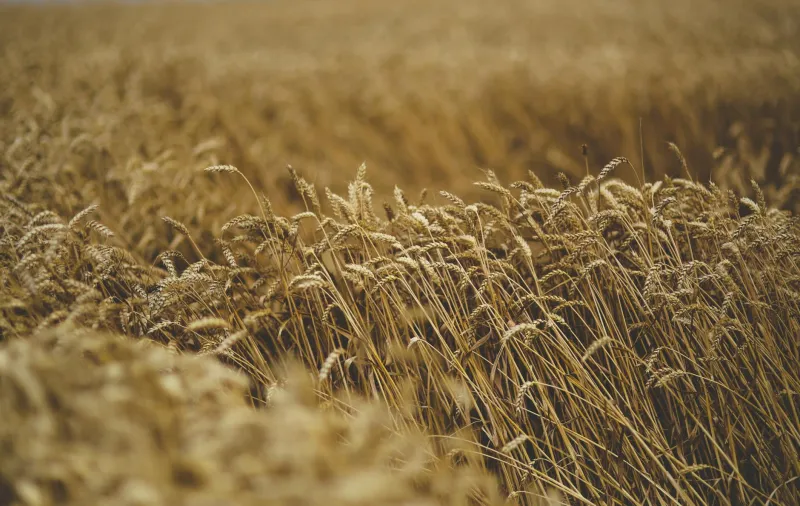
The Boy Nobody Noticed
In 1914, on a small farm outside Cresco, Iowa, a baby was born who would eventually save more lives than any general who won a war, any president who signed a peace treaty, or any doctor who discovered a cure. But Norman Ernest Borlaug didn't look like a world-changer. He looked like every other farm kid in rural Iowa during the hardest decades America had seen.
His parents, Henry and Clara Borlaug, had immigrated from Norway with calloused hands and big dreams that kept getting smaller. The land they farmed was unforgiving, the kind that took more than it gave back. Norman spent his childhood doing what farm kids did: milking cows before dawn, walking behind plows, and learning that survival meant outworking the weather.
The Borlaug family wasn't poor by Depression standards, but they weren't rich by any measure. Norman was smart enough, but not brilliant. Athletic enough, but not exceptional. He was, by every reasonable prediction, headed for a lifetime of farming the same stubborn Iowa soil his father worked.
The Accident That Changed Everything
Norman almost never made it to college. In 1933, fresh out of high school, he was all set to stay on the farm and help his family weather the Depression. Then his grandfather, Nels Olson Borlaug, pulled him aside for a conversation that would accidentally reshape human history.
"You're wasting your time here," the old Norwegian told his grandson in heavily accented English. "Go get all the education you can. It's the only thing nobody can take away from you."
So Norman scraped together $105 — every dollar his family could spare — and enrolled at the University of Minnesota. He was so broke he couldn't afford to live in a dorm. Instead, he found work with the Civilian Conservation Corps, building trails and fighting forest fires to pay for school.
At Minnesota, Norman studied forestry because it seemed practical for a farm kid. But during his junior year, he took a plant pathology course that changed everything. For the first time, someone was talking about plants the way Norman had always thought about them — as living systems that could be understood, improved, and reimagined.
The Mexican Gamble
After earning his PhD, Norman could have taken any number of comfortable academic jobs. Instead, in 1944, he made a decision that seemed insane to everyone who knew him: he moved his young family to Mexico to work on a project nobody believed would succeed.
The Rockefeller Foundation had started a modest agricultural program in Mexico, hoping to help a country where people were still starving regularly. They needed someone to work on wheat — not glamorous work, but essential work. Norman took the job that nobody else wanted.
Mexico in the 1940s was not an easy place for an American scientist. The facilities were primitive, the funding was minimal, and the local agricultural establishment was skeptical of this tall, quiet gringo who wanted to mess with their traditional farming methods.
Norman set up his laboratory in conditions that would make a modern researcher quit on the first day. He worked in converted barns, with equipment he had to build himself, under a sun that turned his pale Norwegian skin to leather.
The Breakthrough Nobody Saw Coming
What Norman was attempting in those Mexican fields had never been done before. He was trying to breed wheat varieties that could resist disease, tolerate different climates, and produce dramatically higher yields. Traditional plant breeding was slow work — it could take decades to develop a new variety.
Norman revolutionized the process. He started "shuttle breeding" — growing crops in different locations with different seasons, which allowed him to get two or three generations of plants per year instead of one. It was backbreaking work that required him to travel constantly between research stations, often sleeping in his truck.
For years, nothing seemed to work. The wheat varieties he developed would thrive in one location but fail in another. Colleagues back in the United States started wondering if Norman was wasting his time on an impossible dream.
Then, in the early 1950s, everything clicked. Norman developed wheat varieties that were not just disease-resistant and high-yielding — they were revolutionary. His new strains could produce five times more grain per acre than traditional varieties.
The Revolution Nobody Expected
By the 1960s, Norman's wheat varieties were spreading across the developing world. Countries that had been importing grain for generations suddenly became self-sufficient. India and Pakistan, facing massive famines, adopted Norman's seeds and techniques. Within a few years, both countries were not just feeding themselves — they were exporting grain.
The numbers tell a story that sounds too good to be true: between 1965 and 1970, wheat production in Pakistan increased by 60%. In India, it doubled. Across Asia, Africa, and Latin America, countries that had known hunger for centuries were suddenly growing more food than they could eat.
Norman had accidentally triggered what came to be known as the Green Revolution. But he remained the same quiet, humble man who had left Iowa decades earlier. He lived modestly, worked constantly, and seemed genuinely surprised when people started calling him a hero.
The Prize Nobody Noticed
In 1970, Norman Borlaug became the only agricultural scientist ever to win the Nobel Peace Prize. The committee recognized that his work had prevented famines that could have killed hundreds of millions of people. Conservative estimates suggest his innovations saved over one billion lives.
But when Norman won the Nobel Prize, most Americans had never heard of him. There were no ticker-tape parades, no presidential ceremonies, no magazine covers. The man who had arguably done more good than anyone else in human history remained as unknown as he had been as a farm kid in Iowa.
Norman continued working well into his 80s, always insisting that the real heroes were the farmers who had trusted his seeds and the scientists who had built on his research. He died in 2009, still relatively unknown outside of agricultural circles, still the same humble man who had once been too poor to afford a college dormitory room.
The Legacy That Lives On
Today, roughly one in seven people on Earth owes their life to Norman Borlaug's work. The wheat varieties he developed, and the techniques he pioneered, continue to feed billions of people around the world.
His story is a reminder that the most important work often happens in places nobody's looking, done by people nobody expects anything from. Norman Borlaug rose from nothing — a small farm, a poor family, a Depression-era childhood — to become the most consequential human being of his century.
And he did it not through flash or fame or fortune, but through the same qualities that got him off that Iowa farm in the first place: relentless work, quiet determination, and an unshakeable belief that tomorrow could be better than today.