The Slush Pile Graveyard: Five Masterpieces That Almost Died in a Publisher's Trash Can
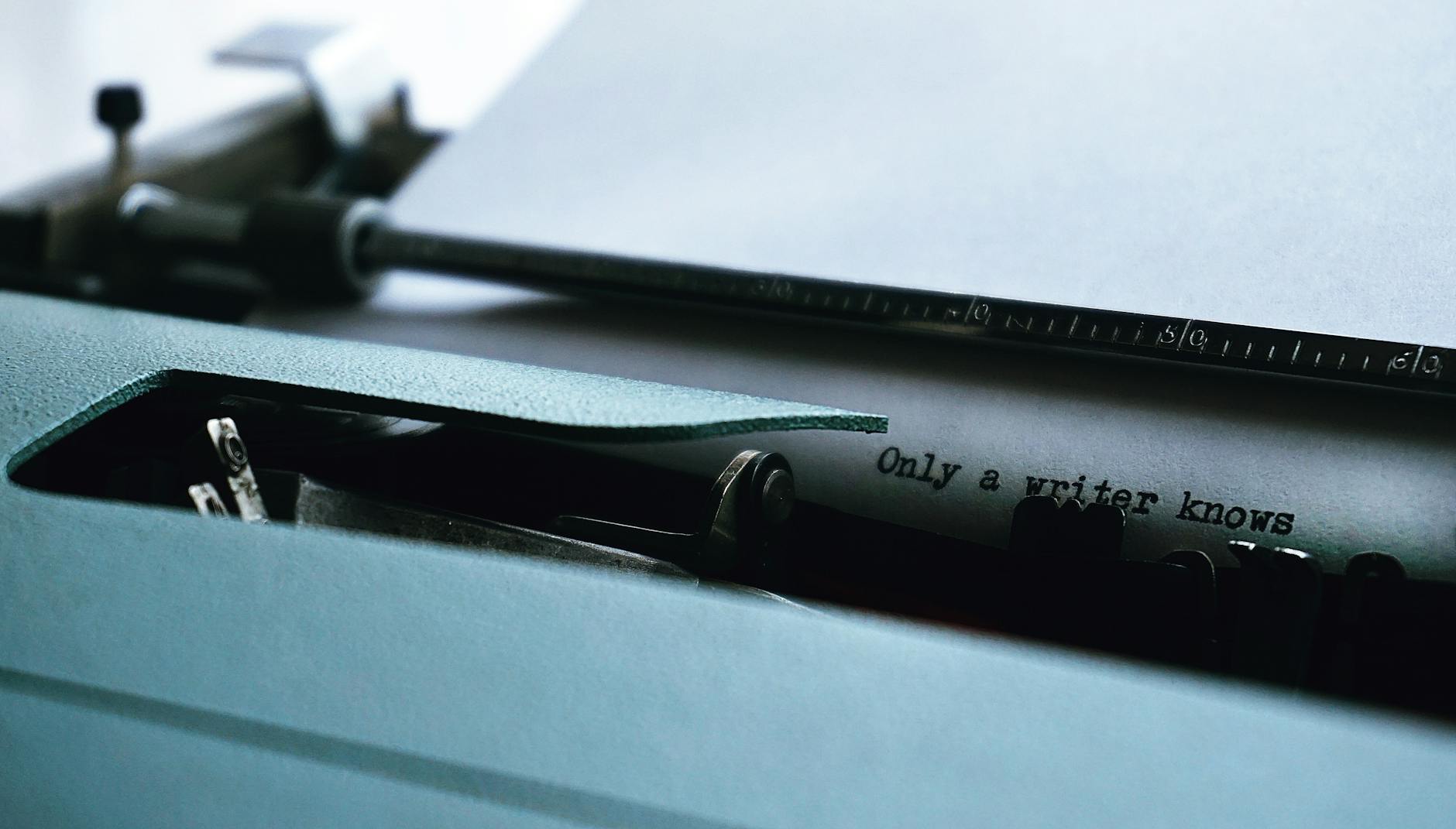
The Slush Pile Graveyard: Five Masterpieces That Almost Died in a Publisher's Trash Can
Somewhere in the publishing history of the United States, there is a version of events in which Dune never got a sequel because it never got a first printing. In which Stephen King went back to teaching high school English and never published another word. In which the story of the Black maids of Jackson, Mississippi sat in a drawer until the woman who wrote it gave up.
Those versions of events almost happened. They came close enough to matter.
The publishing industry has always had gatekeepers — editors, agents, acquisition committees — whose job is to decide what the reading public wants before the reading public has any idea what it wants. Sometimes they're right. More often than the industry's mythology admits, they are spectacularly, embarrassingly wrong. Here are five times the gatekeepers nearly won.
1. Dune by Frank Herbert — 23 Rejections
Frank Herbert spent six years researching and writing Dune before he tried to sell it. He was not an unknown — he'd published shorter work, had a journalism career, understood storytelling craft. None of that helped.
Twenty-three publishers passed on the manuscript between 1963 and 1965. The reasons varied: too long, too strange, too dense, no clear audience. Science fiction was considered a niche genre, and Dune — with its ecological philosophy, its invented religions, its refusal to simplify — didn't fit the pulpy template that sold reliably.
It was finally accepted by Chilton Books, a Philadelphia company better known for publishing auto repair manuals. The editor who championed it, Sterling Lanier, was reportedly pushed out of his job after the book's initial sales disappointed. Then the paperback edition found its audience. Then the counterculture found it. Then everyone else did.
Dune is now the best-selling science fiction novel in history.
Stirling Lanier didn't get to enjoy much of that. The industry moved on. The book didn't.
2. Carrie by Stephen King — Pulled From the Trash
This one has a specific, physical detail that makes it more than a rejection story.
Stephen King finished the first draft of Carrie in 1973, hated it, and threw it in the garbage. Not metaphorically. In the trash. His wife, Tabitha, found it, read the pages, and told him he had something. She convinced him to finish it.
King submitted it to Doubleday. They bought it. The hardcover sold modestly. Then the paperback rights sold for $400,000 — an almost incomprehensible sum at the time — and the Brian De Palma film adaptation turned it into a cultural phenomenon.
The version of this story that gets told is usually about King's self-doubt, about the wife who believed in him. That part is true and worth telling. But there's a colder version underneath it: the manuscript that became the foundation of one of the most successful literary careers in American history was, for a moment, garbage. Literally. It survived because of luck and a spouse who happened to be paying attention.
How many manuscripts didn't have a Tabitha?
3. The Help by Kathryn Stockett — 60 Rejections Over Three Years
Kathryn Stockett wrote The Help over the course of five years, starting shortly after 9/11. When she began submitting it, the rejection letters came back fast and consistent: the subject matter was too regional, the dialect too risky, the market for stories told from the perspective of Black domestic workers in 1960s Mississippi too uncertain.
Sixty agents said no. The sixty-first said yes.
Published in 2009, The Help spent more than 100 weeks on the New York Times bestseller list. The film adaptation earned four Academy Award nominations. It sold over 14 million copies worldwide.
The irony embedded in this particular rejection story is sharp enough to cut: a novel about the voices of Black women being dismissed and ignored was itself dismissed and ignored — by an industry that would later celebrate it as an important American story. The gatekeepers who said no weren't rejecting a bad book. They were rejecting a story they hadn't been trained to recognize as valuable.
4. Gone with the Wind by Margaret Mitchell — Sat in a Closet for a Decade
Margaret Mitchell wrote most of Gone with the Wind in the late 1920s while recovering from an ankle injury in Atlanta. She finished it, put it in a manila envelope, and left it under a chair in her apartment. It sat there for roughly ten years.
She didn't submit it because she didn't think it was good enough. When a Macmillan editor named Harold Latham came through Atlanta on a scouting trip in 1935, Mitchell initially told him she had nothing to show him. A friend's offhand comment — something dismissive about Mitchell not being serious enough to write a real novel — apparently changed her mind. She chased Latham to his hotel and handed him the envelope.
The book won the Pulitzer Prize in 1937. The 1939 film became one of the highest-grossing movies in history.
The gatekeeper in this story wasn't a publisher. It was Mitchell herself. Which raises a different question — not about the industry, but about the stories people talk themselves out of before anyone else gets the chance to say no.
5. Zen and the Art of Motorcycle Maintenance by Robert Pirsig — 121 Rejections
The record holder. Robert Pirsig's philosophical novel was rejected 121 times before William Morrow published it in 1974. The editor who finally accepted it reportedly told Pirsig that while he was sure the book would not be commercially successful, he felt compelled to publish it anyway.
It sold five million copies in its first decade. It has never gone out of print.
Pirsig died in 2017. In a letter he wrote years after publication, he reflected on the rejection period not with bitterness but with something closer to dark amusement — the sense that the book's very resistance to categorization, the quality that made it unpublishable to 121 editors, was exactly what made it last.
The Question Nobody Wants to Answer
Every one of these stories has a happy ending because we know how they end. The book survived. The writer persisted. The right person finally said yes.
But the publishing slush pile is not a museum. It's a landfill. For every Dune that found its Chilton Books, there are manuscripts that ran out of submissions, writers who ran out of money or time or belief, stories that existed once and then didn't.
We will never know their titles. We will never know what we lost.
The inspirational version of this piece ends with: keep submitting, keep believing, your time will come. That's true, and worth saying.
But the honest version ends here: the gatekeepers are fallible, the system is imperfect, and some of the greatest stories ever written are gone forever because the wrong person read them on the wrong afternoon.
The ones that made it through were the lucky ones. The question is whether luck is enough of a system to build a culture on.