What the World Said They Were Missing Was Exactly What Made Them Great
There's a particular kind of cruelty in being told you cannot do the one thing you love most. Not because the world is wrong about the obstacle — the obstacle is real — but because the world is almost always wrong about what the obstacle means. These three Americans found that out the hard way. And then they found something else entirely.
Tom Sunstrum: The Man Who Listened to the Seams
Somewhere in the early 1940s, a teenager named Tom Sunstrum was playing semi-professional baseball in the upper Midwest when a childhood illness quietly stole the last of his functional vision. By the time he was nineteen, he could barely distinguish light from shadow. By most reasonable measures, his baseball career was finished before it had properly started.
He kept pitching anyway.
What Sunstrum developed over the next decade wasn't a workaround. It was something closer to a sixth sense built from the five he still had. He learned to read a batter's stance from the sound of their feet shifting in the dirt. He learned to time his release from the ambient noise of a crowd — the held breath before contact, the collective exhale when a pitch broke late. Former catchers who worked with him in exhibition games during the late 1940s described the experience as unsettling in the best possible way. "He knew where I was before I said anything," one recalled. "I'd squat down and he'd already be adjusting his grip."
Sunstrum never made the major leagues. That's not the point. What he made instead was a philosophy of performance that his coaches quietly passed along for years after he retired. The idea was simple and radical at once: when you remove one source of information, the remaining ones get louder. Batters who could see every pitch coming still swung at his curveball because they were reading with their eyes. Sunstrum was reading with everything else.
His story didn't make the history books. But the coaches who learned from him — the ones who started teaching hitters to listen for the rotation of the ball, to feel the wind shift, to trust peripheral instinct over direct focus — those coaches changed how a generation played the game. The blind pitcher didn't lose his art. He deepened it.
Theresa McGee: The Sculptor Who Trusted Her Hands More Than Her Eyes
Theresa McGee was born in Cincinnati in 1887 into a family of modest means and loud opinions. She went deaf at age four following a bout of scarlet fever, and by the time she reached adolescence, the world had already decided what her life would look like: quiet, domestic, limited.
 Photo: Theresa McGee, via tbpfinance.com
She had other ideas.
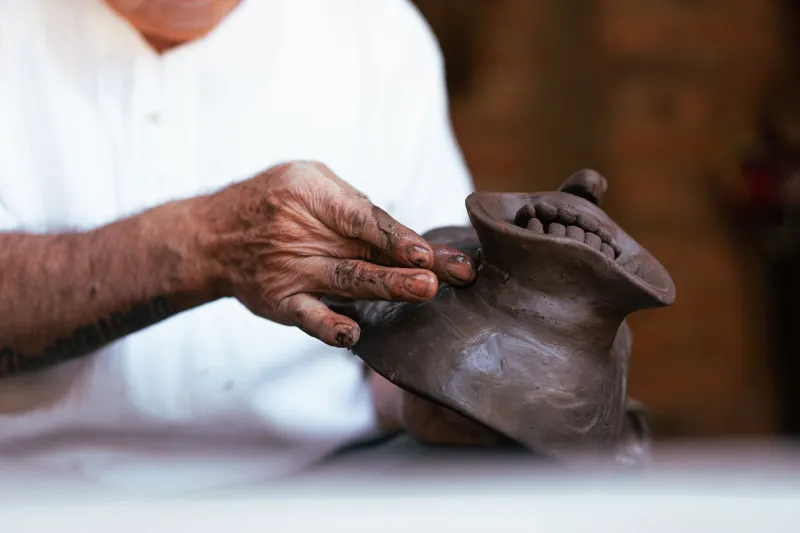
McGee discovered clay in her early twenties through a settlement house arts program — one of the many progressive social institutions that dotted American cities in the early 1900s. What struck her instructor immediately wasn't her talent, exactly, but her process. Where hearing students sculpted with their eyes doing most of the work, McGee sculpted with her palms. She would close her eyes during the shaping phase entirely, relying on pressure and temperature and the minute resistance of the material to guide her.
The results were startling. Her figures had a quality that critics of the era struggled to describe accurately. The closest they came was interior — as though the emotion in each piece came from inside the stone rather than being applied to the surface. A 1924 review in a Cincinnati arts journal called her portrait busts "disturbingly alive in a way that technically superior work rarely manages to be."
McGee worked primarily in bronze and limestone and spent the last thirty years of her career teaching at a school for the deaf in Ohio, where she insisted that her students work blindfolded for the first three months. "Sight makes you copy," she reportedly told them. "Your hands make you feel."
Her pieces are scattered now across small museum collections in the Midwest, rarely headlined, often overlooked. But the artists who trained under her carried that blindfolded methodology into their own studios and classrooms, and traces of her philosophy have surfaced in American sculptural education in ways that no one has properly credited. She didn't just make art. She made a method. And the deafness that the world counted as her limitation was, it turns out, the engine of the whole thing.
Paul Wittgenstein's American Chapter: One Arm, One Standard, One Legacy
Most people who know the name Paul Wittgenstein know the Austrian half of the story — the concert pianist who lost his right arm in World War One and commissioned Ravel's famous left-hand concerto. What fewer people know is the American chapter that followed.
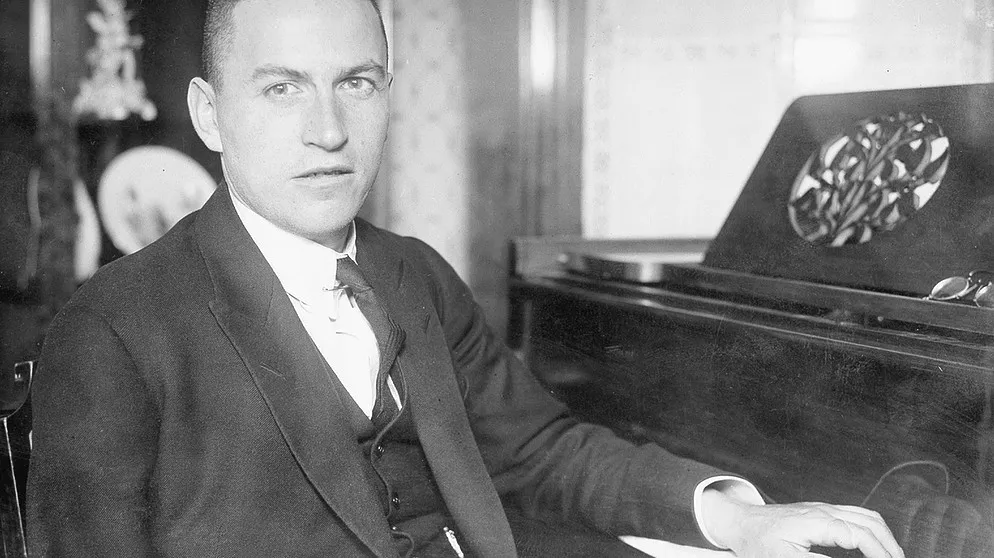 Photo: Paul Wittgenstein, via www.br-klassik.de
Wittgenstein fled Europe in 1938 as the Nazis rose to power and settled in New York, where he spent the next two decades teaching, performing, and conducting in a musical culture that wasn't entirely sure what to make of him. He was, by any measure, a difficult figure — demanding, uncompromising, occasionally furious with orchestras that couldn't match his expectations. But what he brought to American concert life in those years was something that couldn't be manufactured: the absolute moral authority of someone who had lost everything twice and kept playing.
His conducting was unconventional in ways that made traditionalists uncomfortable. Without a right arm to provide the standard downbeat cues, he developed a vocabulary of gesture that relied heavily on his left arm, his posture, his eyes, and the particular quality of his silence before a phrase began. Musicians who played under him in New York and Boston described rehearsals as intense, sometimes frightening, always illuminating. "He couldn't give you the beat the way everyone else gave the beat," one violinist recalled years later. "So he gave you something better. He gave you the feeling underneath the beat."
Wittgenstein never became a household name in America the way he might have in a different century. But the composers he commissioned, the students he trained, and the recordings he left behind shaped the American relationship with left-hand piano repertoire in ways that are still being measured. He arrived in New York with one arm and a European reputation that meant little to a country busy building its own musical identity. He left, decades later, having expanded what American classical music believed was possible.
The arm he lost on a Russian battlefield in 1914 was, in the end, the reason Ravel wrote one of the twentieth century's most beloved concertos. The limitation created the art. The absence made the music necessary.
The Lesson That Runs Through All Three
These three lives don't share a genre or a generation or even a city. What they share is something quieter and more stubborn: the refusal to accept the world's definition of what their condition meant for their art.
The world said Tom Sunstrum couldn't pitch without sight. He learned to hear the game.
The world said Theresa McGee couldn't sculpt without sound. She learned to feel the stone.
The world said Paul Wittgenstein couldn't conduct without a right arm. He learned to lead without the gesture everyone else relied on.
In each case, the limitation didn't diminish the art. It stripped away everything that wasn't essential and left only what was real. And what was real turned out to be more than enough.